Patient guide
Adenomyosis (bulky uterus) treatment without hysterectomy: embolization with Mirena if needed
What adenomyosis is, how it differs from fibroids, the symptoms, and how uterine artery embolization, with a Mirena (hormone coil) added if symptoms return, can control adenomyosis without hysterectomy in selected patients.
Why women choose this plan
- Uterus keptIn selected women
- No cuts, no stitchesA pinhole entry
- Scheduled reviewsAt 1, 3, 6, 12 and 18 months
- 0 of 27Needed hysterectomy after a Mirena
- 76% improveAfter embolization alone


Watch Dr. Nagateja explain this
Short videos on the same topic, in plain language.
What adenomyosis is
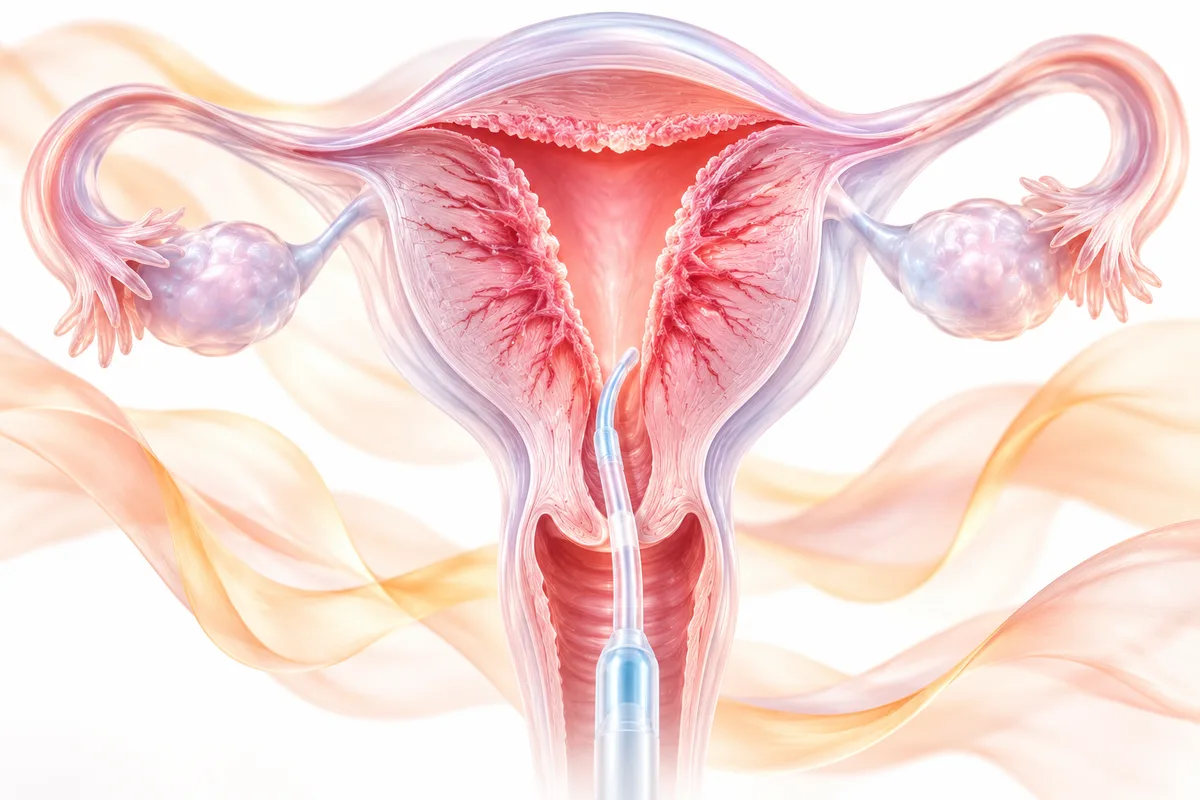
The uterus is lined by tissue that builds up and sheds every month. In adenomyosis, this tissue grows into the muscular wall. The wall thickens, the uterus becomes enlarged and tender, and periods become heavy and painful. On a scan report this is often described as a bulky uterus, which is why many women search for that term first. Our guide to bulky uterus explains the other causes. It is most often found in women in their thirties and forties.
Symptoms
These overlap with fibroids, which is why scans matter:
- Heavy or prolonged periods
- Severe period cramps that may worsen over the years
- Pelvic pain or pain during sex
- A bulky, tender lower abdomen
- Bleeding between periods in some women
Adenomyosis and fibroids compared
They are different problems, which can need different treatment.
| Fibroids | Adenomyosis | |
|---|---|---|
| What it is | Separate muscle growths | Lining tissue growing into the muscle wall |
| Uterus shape | Lumpy outline | Evenly enlarged |
| Typical pain | Pressure, sometimes pain | Cramping pain is a common feature |
| Embolization response | Reliable shrinkage [1] | Symptom relief in many, but it can recur if embolization is used alone |
Treatment options, including the combined approach
Options include pain relief medicines, hormonal treatments such as tablets or a Mirena (levonorgestrel-releasing) coil, procedures such as uterine artery embolization, and hysterectomy. Medicines help while taken, but symptoms often return when they stop.
Uterine artery embolization alone reduces blood flow to the uterus, which can lighten periods and ease pain. A 2026 systematic review of 22 studies and 1,701 women with therapy-resistant adenomyosis found significant improvement in 76.4%, with 3.2% needing a hysterectomy later for recurring symptoms, over a mean follow-up of 28 months [4]. Follow-up in the included studies ranged from 3 to 88 months, and some women do see symptoms return over time.
At Clinic Seven, embolization is followed by review visits at 1, 3, 6, 12 and 18 months, with symptoms and uterine volume checked each time. The scan at 3 months after embolization is taken as your new baseline, once the first shrinkage has happened. At every visit we want the uterine volume to stay stable against that baseline and you to stay free of symptoms. If symptoms start to return, or the uterine volume rises by more than 10% over 3-6 months from that baseline, we recommend a Mirena at that point. The Mirena acts directly on the uterine lining and muscle to hold the improvement. In selected patients this stepwise plan aims at lasting control without hysterectomy.
This approach is for women who want to keep their uterus and are not planning pregnancy. Whether it suits you depends on your MRI, symptoms and age, and it is decided at consultation.
Ini' et al., CVIR Endovasc 2026, 22 studies, mean follow-up 28 months.
Our own results
Our approach is embolization first, then close follow-up, with a Mirena recommended if symptoms return or the uterine volume rises by more than 10% over 3-6 months. We followed 38 carefully selected women who had uterine artery embolization for adenomyosis, for up to 5 years.
Twenty-seven went on to have a Mirena, and none of them needed a hysterectomy. Eleven did not have a Mirena. Six of these declined it when it was recommended, and all 6 had a hysterectomy after about 18 months. The other 5 stayed stable on follow-up, with no rise in uterine volume and no symptoms, so a Mirena was not needed and they did not need a hysterectomy.
So in this group, hysterectomy was needed only by women who did not have the Mirena.
These figures need to be read carefully. All 38 patients were chosen with great care after MRI and consultation, so the result does not apply to every woman with adenomyosis. This is our clinic's own experience in a small series, not a published trial, and the groups were not randomised. Women who needed a Mirena are, by design, those whose symptoms or uterine volume were heading the wrong way, so the groups differ in ways the numbers do not show. Your outcome can differ, and your own plan is discussed with you at consultation.
Clinic Seven's own series, 38 carefully selected women followed for up to 5 years. Not a published trial.
Getting the diagnosis right
At Clinic Seven, Dr. Nagateja Bonala reviews your ultrasound and MRI to confirm whether you have fibroids, adenomyosis or both, and explains which options fit. Bring all scans to the first visit.
Frequently asked questions
- Can adenomyosis be treated without hysterectomy?
- In selected patients, yes. At Clinic Seven, uterine artery embolization is followed by review visits at 1, 3, 6, 12 and 18 months, and a Mirena is added if symptoms return or the uterine volume rises by more than 10% over 3-6 months, aiming at lasting control while keeping the uterus. In our own series of 38 carefully selected patients followed for up to 5 years, none of the 27 who had the Mirena stage needed a hysterectomy. Hysterectomy remains an option if this does not work or is not suitable.
- Does embolization work as well for adenomyosis as for fibroids?
- Embolization alone gives significant improvement in about three quarters of women in a 2026 systematic review of 1,701 patients [4], but symptoms can return over time. Adding a Mirena if symptoms return or the uterine volume rises by more than 10% over 3-6 months is how we aim to make the result last in selected patients. Your doctor will discuss realistic expectations after your MRI [1].
- How often does embolization followed by Mirena work for adenomyosis?
- In Clinic Seven's own series of 38 carefully selected patients, followed for up to 5 years, none of the 27 who had a Mirena after embolization needed a hysterectomy. Of the 11 who did not have a Mirena, 6 had a hysterectomy after about 18 months, and all 6 had declined it when it was recommended. This is our own small, non-randomised clinic data, not a published trial, so your result may differ.
- What is the Mirena stage of treatment?
- Mirena is a small hormone-releasing coil placed in the uterus. It is not placed at the same time as embolization. After embolization you are reviewed at 1, 3, 6, 12 and 18 months, and we recommend a Mirena if symptoms return or the uterine volume rises by more than 10% over 3-6 months. It releases a progestin locally, which helps keep periods light and pain controlled.
- Can I get pregnant with adenomyosis?
- Some women do, but adenomyosis can make conception and pregnancy harder. If pregnancy is your goal, embolization is not usually the first choice and you should discuss your plans first.
- How is adenomyosis diagnosed?
- Through your symptoms, a pelvic examination and imaging. MRI is the most accurate scan for telling adenomyosis apart from fibroids.
References
- Society of Interventional Radiology. Uterine fibroids: patient information. Read the source
- RadiologyInfo.org (RSNA and ACR). Uterine fibroid embolization (UFE). Read the source
- American College of Obstetricians and Gynecologists. Uterine fibroids: FAQs. Read the source
- Ini' C, Timpanaro C, Foti PV, et al. Uterine artery embolization for the treatment of symptomatic adenomyosis: a systematic review. CVIR Endovasc. 2026;9:87. Read the source
Want to discuss your options?
Speak with the Clinic Seven team.