Liver Tumour Microwave Ablation in Hyderabad Focused care.
For liver tumours.
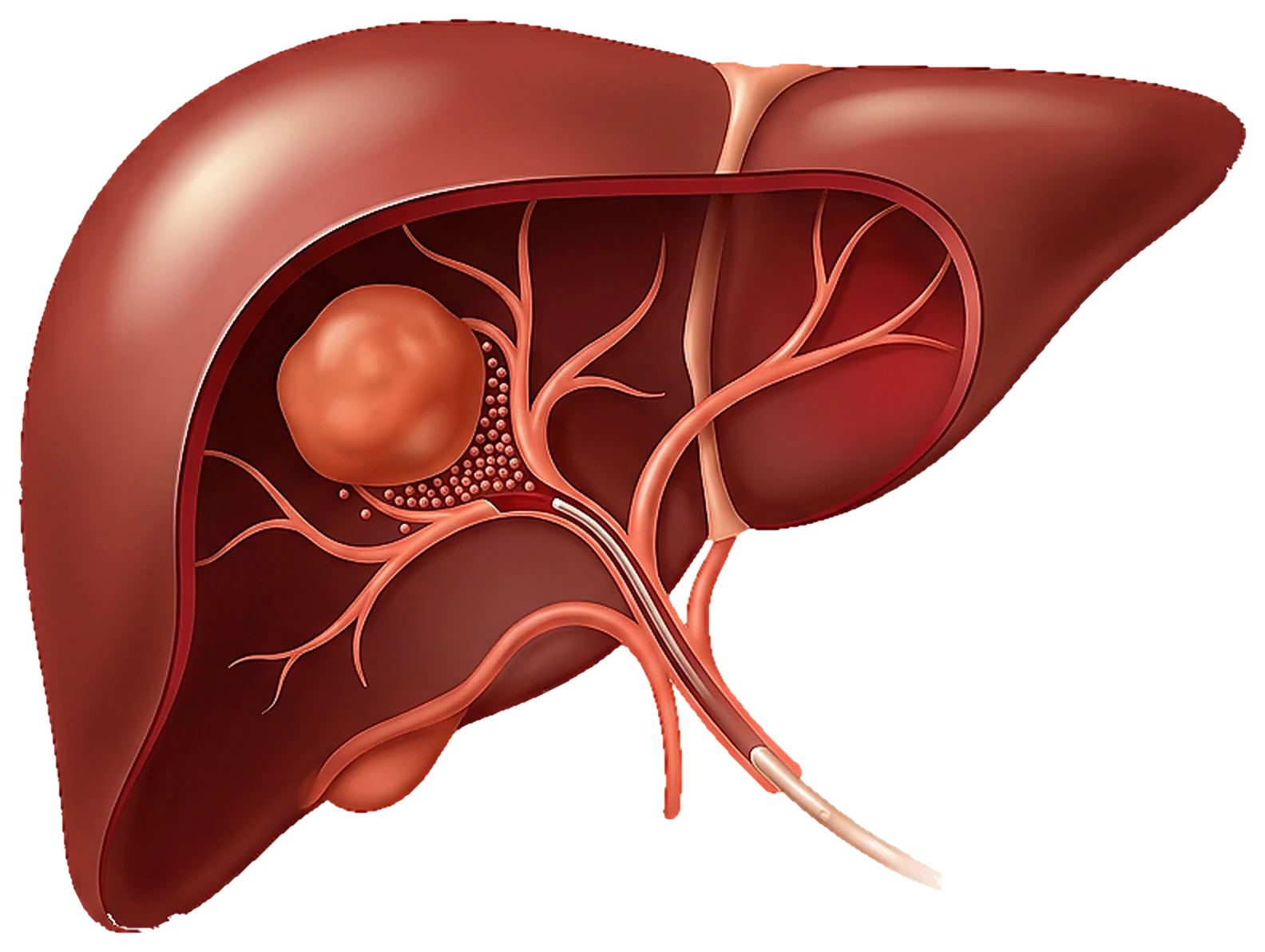
Image-guided heat treatment directed at a liver tumour.
A precise option for selected liver tumours.
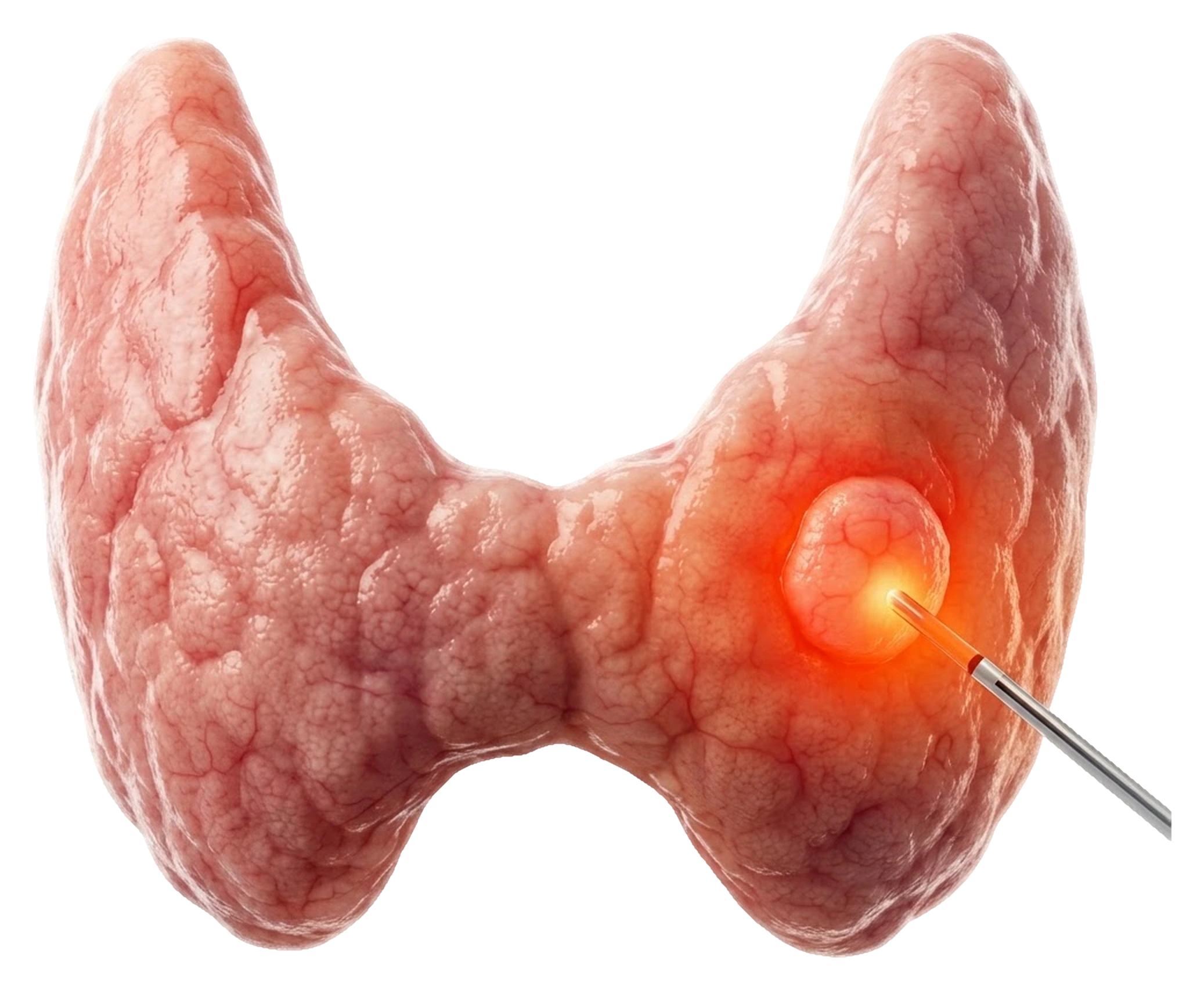
Microwave ablation treats the targeted area through a small needle access point.
A thin microwave probe delivers heat directly to a liver tumour under image guidance, destroying it in a single, short outpatient session.
About MWA
Microwave Ablation (MWA) is an image-guided, curative-intent treatment for small liver tumours, including hepatocellular carcinoma (HCC) and selected liver metastases up to about 3 centimetres. At Clinic Seven in Hyderabad, CT or ultrasound guides a thin microwave antenna directly into the tumour under sedation and local anaesthesia.
Microwave energy heats and destroys the tumour together with a safety margin of healthy tissue around it, in a single 20-40 minute session. MWA achieves local control rates above 90% for tumours under 3 cm in published series, is repeatable if new lesions appear, and is a proven option for patients who are unfit for liver surgery or waiting for transplant, based on NCCN, BCLC and AASLD guidance.
- Curative intent for HCC and liver metastases under about 3 cm.
- Local control above 90% for small tumours in published series.
- Single 20-40 minute session under sedation.
- Can be combined with TACE for larger or difficult tumours.




Personalized scenarios are presented during consultation. Individual results may vary.
Symptoms of Liver Tumours (small HCC & metastases)
Small liver tumours suited to microwave ablation are usually found on surveillance scans before symptoms appear. When present, signs overlap with liver disease:
- Discomfort in the upper right abdomen
- Unexplained weight loss
- Tiredness and a reduced appetite
- A new nodule on ultrasound, CT or MRI
- A rising tumour marker (AFP or CEA) on follow-up
- Known cirrhosis under scan surveillance
If these symptoms sound familiar, book an evaluation with Dr. Nagateja Bonala at Clinic Seven, Hyderabad.
- •Large tumours over about 5 cm, which may need TACE first or a combined approach
- •Tumours next to bowel, bile duct or diaphragm without protective steps
- •Advanced liver failure
- •An uncontrolled bleeding tendency
How the MWA procedure works
Every step is planned and performed under image guidance by an Interventional Radiologist at Clinic Seven, Hyderabad.
- 01
Planning
CT or ultrasound identifies the tumour, size and safest path for the probe.
- 02
Placement
Under image guidance, a thin microwave antenna is placed into the tumour.
- 03
Ablation
Microwave energy heats the tumour to destruction while a safety margin is created.
- 04
Confirmation
Post-ablation imaging confirms complete coverage before removing the probe.
Microwave ablation vs surgical resection
| Factor | MWA | Surgical liver resection |
|---|---|---|
| Access | Thin needle through the skin | Open or laparoscopic surgery |
| Anaesthesia | Sedation with local anaesthesia | General anaesthesia |
| Healthy liver | Preserved with a safety margin | A segment is removed |
| Small tumours (<3 cm) | Outcomes comparable to surgery | Standard option |
| Hospital stay | One night | Several days |
| Repeatable | Yes, for new lesions | Limited |
The right choice depends on your scans, symptoms and goals. Your Interventional Radiologist will talk you through both options at your consultation.
Recovery timeline
Most patients treated at Clinic Seven follow a predictable recovery path with a follow-up review scheduled at the first visit.
- Overnight observation.
- Light activity in 3-5 days.
- MRI or CT review in 4-6 weeks.
Risks and safety
Every procedure carries some risk. These are the ones your Interventional Radiologist will review before MWA.
- Mild pain and low-grade fever for 24-48 hours.
- Small risk of bleeding or biliary injury.
- Rare skin burn at the entry site.
What affects the cost
The cost of liver microwave ablation in Hyderabad depends on the number of tumours, the ablation system and the hospital category. Guideline-based ablation for liver tumours is covered by most cancer and insurance plans.
For a personalised estimate and insurance guidance, contact Clinic Seven with your recent reports.
- Number and size of tumours
- Microwave system used
- Hospital and room category
- CT/MRI and liver function workup
- Combination with TACE if planned
- Insurance and cashless approval
Get a rough idea of the cost
Choose what matters to you and we will show a guide. Nobody is committed to anything, and our team will never rush you.
Is your insurance accepted?
Cashless with major insurers, TPAs and office group policies. CGHS and Singareni on credit.
Popular searches
Cover is confirmed by our team after checking your policy and treatment plan.
View all insurersDr. Nagateja Bonala
Dr. Nagateja Bonala is the Interventional Radiologist at Clinic Seven, Hyderabad, with 13+ years of image-guided practice. Every MWA case is planned personally with a review of your scans and reports.
Plan your next step
Bring your recent scans, blood tests and any prior specialist notes. Message us on the contact page for directions, timings and insurance guidance.
Questions about MWA
Microwave Ablation (MWA) is a percutaneous, image-guided procedure in which a thin antenna is placed directly into a liver tumour and microwave energy heats the tumour to destroy it. A safety margin of healthy liver around the tumour is also treated to reduce recurrence.
Both are heat-based ablation techniques. MWA usually reaches higher temperatures faster, is less affected by nearby blood vessels (the 'heat sink' effect), and can treat slightly larger volumes in one session. Choice depends on tumour size, location and operator experience.
For small hepatocellular carcinomas up to about 3 cm, ablation is used with curative intent, and survival outcomes are comparable to surgical resection in selected patients, based on BCLC and NCCN guidance.
Most patients stay one night in hospital, return to light activity in 3-5 days and go back to work in about 7 days. A CT or MRI at 4-6 weeks confirms the treated area.
Mild pain and low-grade fever for 24-48 hours are common. Rare risks include bleeding, biliary injury, pleural effusion, skin burn at the entry site and incomplete ablation, which are minimised with careful image guidance.
Yes. If new tumours appear or a small residual area is seen on follow-up imaging, MWA can be repeated safely, as long as liver function and anatomy allow.
Yes. For tumours between 3 and 5 cm, or those with challenging blood supply, TACE followed by MWA can improve local control by shrinking the tumour first and then completing the ablation.
Clinic Seven, Hyderabad offers image-guided Microwave Ablation for liver tumours by Dr. Nagateja Bonala, with multidisciplinary review of your CT or MRI, AFP and liver function reports.
Related treatments at Clinic Seven
Minimally invasive, image-guided options by Dr. Nagateja Bonala in Hyderabad.