Peripheral Arterial Disease Treatment in Hyderabad Walk farther.
Live fuller.
Image-guided treatment to help restore blood flow to the legs.
Every step deserves better circulation.
Care for narrowed arteries can help protect comfort and mobility.
A catheter-based treatment that opens narrowed or blocked leg arteries, improving blood flow, walking distance and wound healing without open bypass surgery.
About PAD
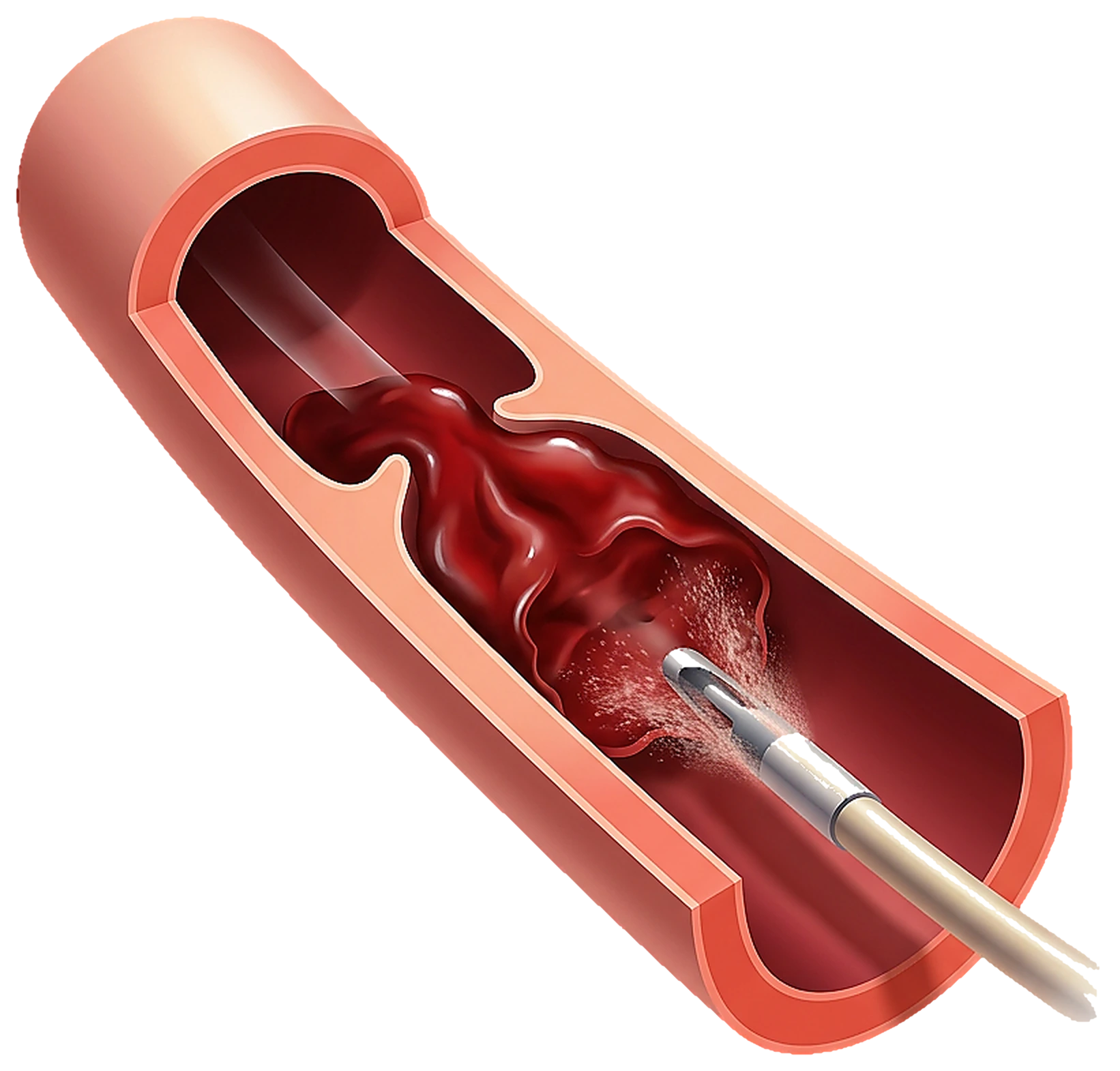
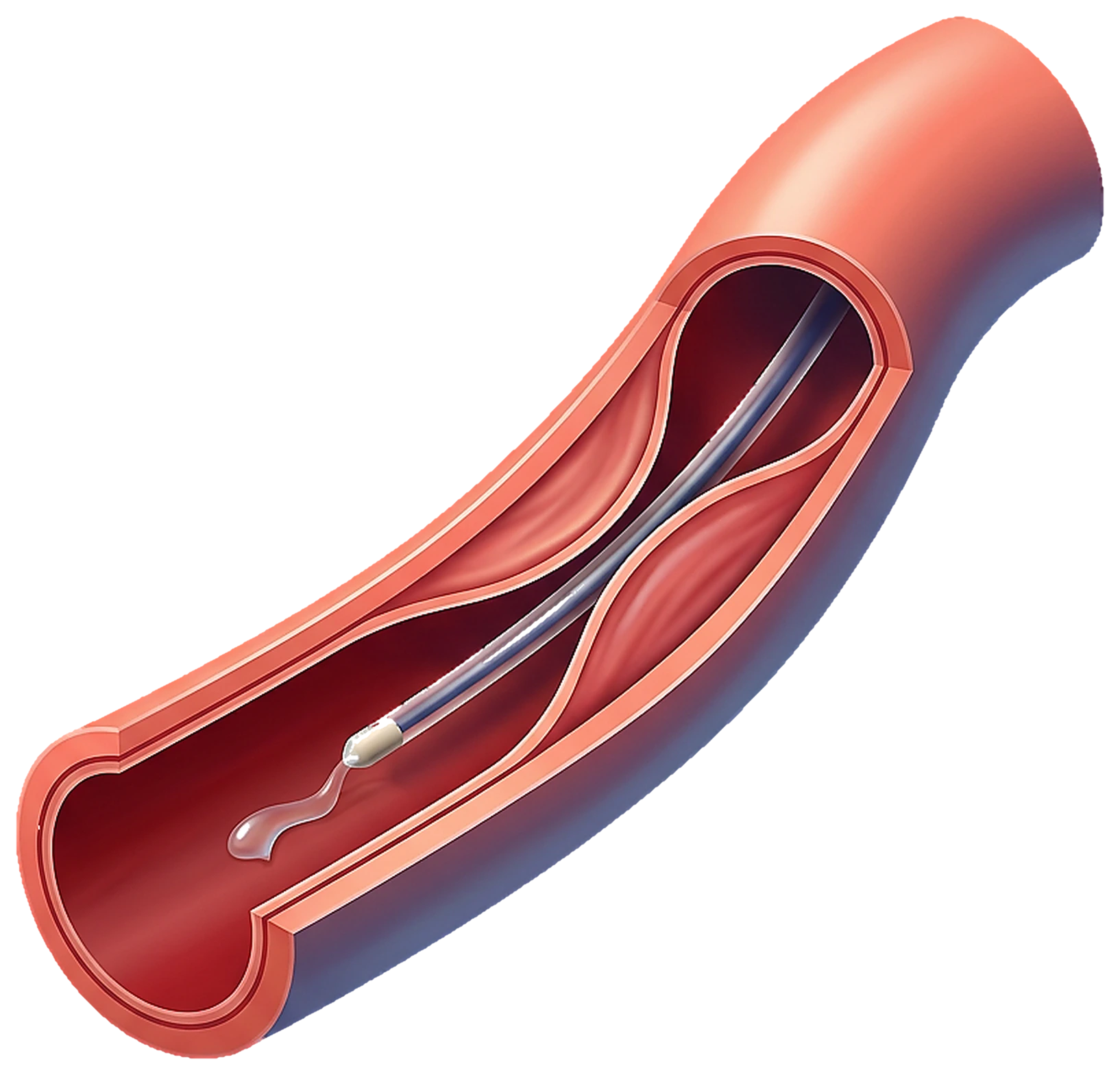
Peripheral Arterial Disease (PAD) is caused by atherosclerotic plaque that narrows or blocks the arteries in the legs and reduces blood flow. It causes walking pain (intermittent claudication), rest pain, cold or discoloured feet, non-healing foot wounds and, in severe cases, gangrene and limb loss. At Clinic Seven in Hyderabad, an Interventional Radiologist uses angioplasty, drug-coated balloons, stents and atherectomy through a small wrist or groin puncture to reopen the blocked leg arteries under X-ray and ultrasound guidance.
This restores blood flow, improves walking distance, relieves rest pain and helps foot wounds heal, without the need for open bypass surgery. Diabetic foot disease, critical limb ischaemia and smokers with claudication are common referrals, and management follows ACC/AHA and TASC II PAD guidance.
- Restores blood flow to painful, cold or wounded legs without open bypass.
- Improves walking distance in intermittent claudication.
- Limb-saving for critical limb ischaemia and diabetic foot disease.
- Uses angioplasty, drug-coated balloons, stents and atherectomy.




Personalized scenarios are presented during consultation. Individual results may vary.
Symptoms of Peripheral Arterial Disease (PAD)
PAD reduces blood flow to the legs and feet. Symptoms progress from exercise pain to rest pain and wounds if it is left untreated:
- Cramping leg or calf pain on walking that eases with rest (claudication)
- Pain in the foot or toes at rest, worse at night
- Cold, pale or bluish feet
- Non-healing wounds or ulcers on the foot or toes
- Shiny skin, hair loss or slow nail growth on the legs
- Weak or absent foot pulses
- Gangrene or blackening of the toes (advanced)
If these symptoms sound familiar, book an evaluation with Dr. Nagateja Bonala at Clinic Seven, Hyderabad.
- •Very mild claudication managed well with exercise and medicines
- •Blockages unsuitable for catheter treatment, which may need bypass
- •Non-vascular leg pain from nerve or joint causes
- •Uncorrected severe contrast allergy or kidney issues until optimised
How the PAD procedure works
Every step is planned and performed under image guidance by an Interventional Radiologist at Clinic Seven, Hyderabad.
- 01
Assess
Doppler, CT angiography or catheter angiography maps the blockages.
- 02
Access
A catheter is inserted through a small puncture under local anaesthesia.
- 03
Open
Balloon angioplasty, stent placement or plaque removal restores flow.
- 04
Protect
Medication, foot care and follow-up imaging help keep arteries open.
Angioplasty vs open bypass surgery
| Factor | PAD | Open bypass surgery |
|---|---|---|
| Access | Small artery puncture | Long surgical incisions |
| Anaesthesia | Local anaesthesia | General or regional |
| Recovery | 1–2 days | 1–2 weeks or more |
| High-risk / diabetic patients | Often preferred | Higher surgical risk |
| Repeatable | Yes, if re-narrowing occurs | Harder to redo |
| Limb salvage | Yes, for critical ischaemia | Yes |
The right choice depends on your scans, symptoms and goals. Your Interventional Radiologist will talk you through both options at your consultation.
Recovery timeline
Most patients treated at Clinic Seven follow a predictable recovery path with a follow-up review scheduled at the first visit.
- Walking starts soon.
- Light activity in a few days.
- Blood thinners as advised.
Risks and safety
Every procedure carries some risk. These are the ones your Interventional Radiologist will review before PAD.
- Bruising or bleeding at the access site.
- Re-narrowing can occur and may need follow-up treatment.
- Rare vessel injury, clotting or contrast-related issues.
What affects the cost
The cost of PAD angioplasty in Hyderabad depends on the number and length of blockages, the use of plain or drug-coated balloons or stents, and the hospital category. PAD revascularisation is covered by most insurance plans, including for diabetic foot disease.
For a personalised estimate and insurance guidance, contact Clinic Seven with your recent reports.
- Number and length of blockages
- Plain versus drug-coated balloon or stent
- Atherectomy if hard plaque needs removal
- Hospital and room category
- Doppler/CT angiography and diabetic workup
- Insurance and cashless approval
Get a rough idea of the cost
Choose what matters to you and we will show a guide. Nobody is committed to anything, and our team will never rush you.
Is your insurance accepted?
Cashless with major insurers, TPAs and office group policies. CGHS and Singareni on credit.
Popular searches
Cover is confirmed by our team after checking your policy and treatment plan.
View all insurersDr. Nagateja Bonala
Dr. Nagateja Bonala is the Interventional Radiologist at Clinic Seven, Hyderabad, with 13+ years of image-guided practice. Every PAD case is planned personally with a review of your scans and reports.
Plan your next step
Bring your recent scans, blood tests and any prior specialist notes. Message us on the contact page for directions, timings and insurance guidance.
Questions about PAD
PAD is a narrowing or blockage of the arteries supplying the legs, most often from cholesterol plaque. It causes pain on walking, cold feet, discolouration and, when severe, wounds that will not heal.
Diagnosis begins with a pulse examination and Ankle Brachial Index (ABI), followed by Doppler ultrasound, CT angiography or catheter angiography to map the blockages before treatment.
Through a small catheter placed in the wrist or groin artery, the blocked segment is opened with balloon angioplasty, sometimes using a drug-coated balloon. A stent is placed if the vessel does not stay open, and hard plaque may be removed by atherectomy.
Blood flow can be restored, symptoms can be relieved and wounds can heal, but the underlying atherosclerosis needs long-term control with anti-platelet medicine, statins, blood pressure and diabetes management, and no smoking.
For many blockages, catheter treatment gives similar limb-saving outcomes with less pain, no long incision and faster recovery. Complex or long blockages may still need bypass, and this is decided together by the vascular team.
Re-narrowing is possible, particularly in diabetes and long blockages. Follow-up ultrasound at 3, 6 and 12 months helps catch problems early, and repeat treatment is usually straightforward.
Untreated critical limb ischaemia and diabetic foot disease can end in amputation. Timely catheter-based revascularisation, wound care and diabetes control significantly reduce that risk.
Clinic Seven, Hyderabad offers angioplasty, stenting and atherectomy for Peripheral Arterial Disease by Dr. Nagateja Bonala. Please bring your Doppler or CT angiogram, HbA1c and lipid profile to the consultation.
Related treatments at Clinic Seven
Minimally invasive, image-guided options by Dr. Nagateja Bonala in Hyderabad.