Genicular Artery Embolization (GAE) in Hyderabad Less knee pain.
Without an incision.
Image-guided treatment through a needle-sized access for knee osteoarthritis pain.
A newer option between injections and knee replacement.
GAE is considered when exercise, medicines and injections have not been enough.
An image-guided treatment that closes tiny arteries feeding an inflamed knee lining, to ease osteoarthritis pain without an incision.
About GAE
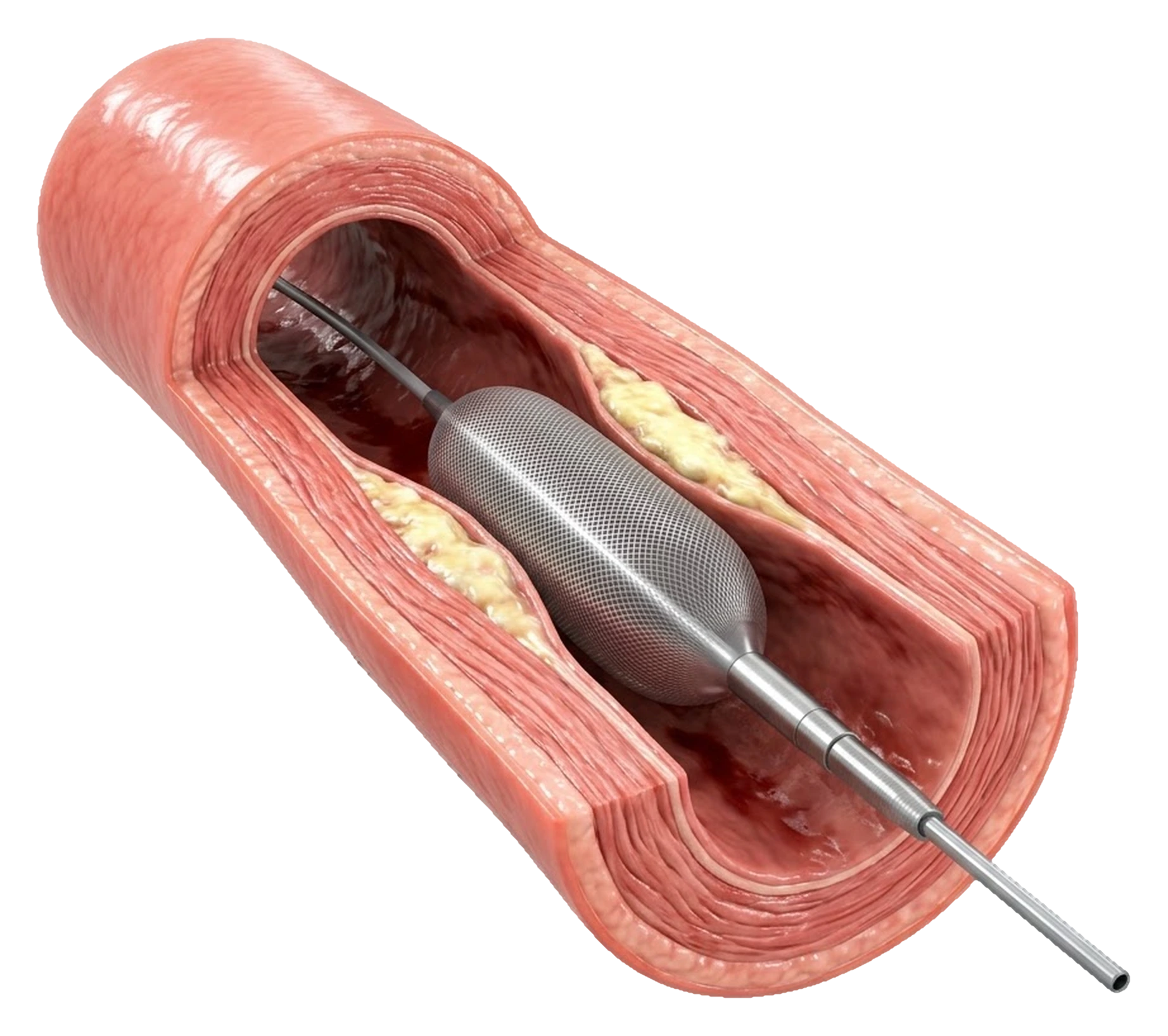
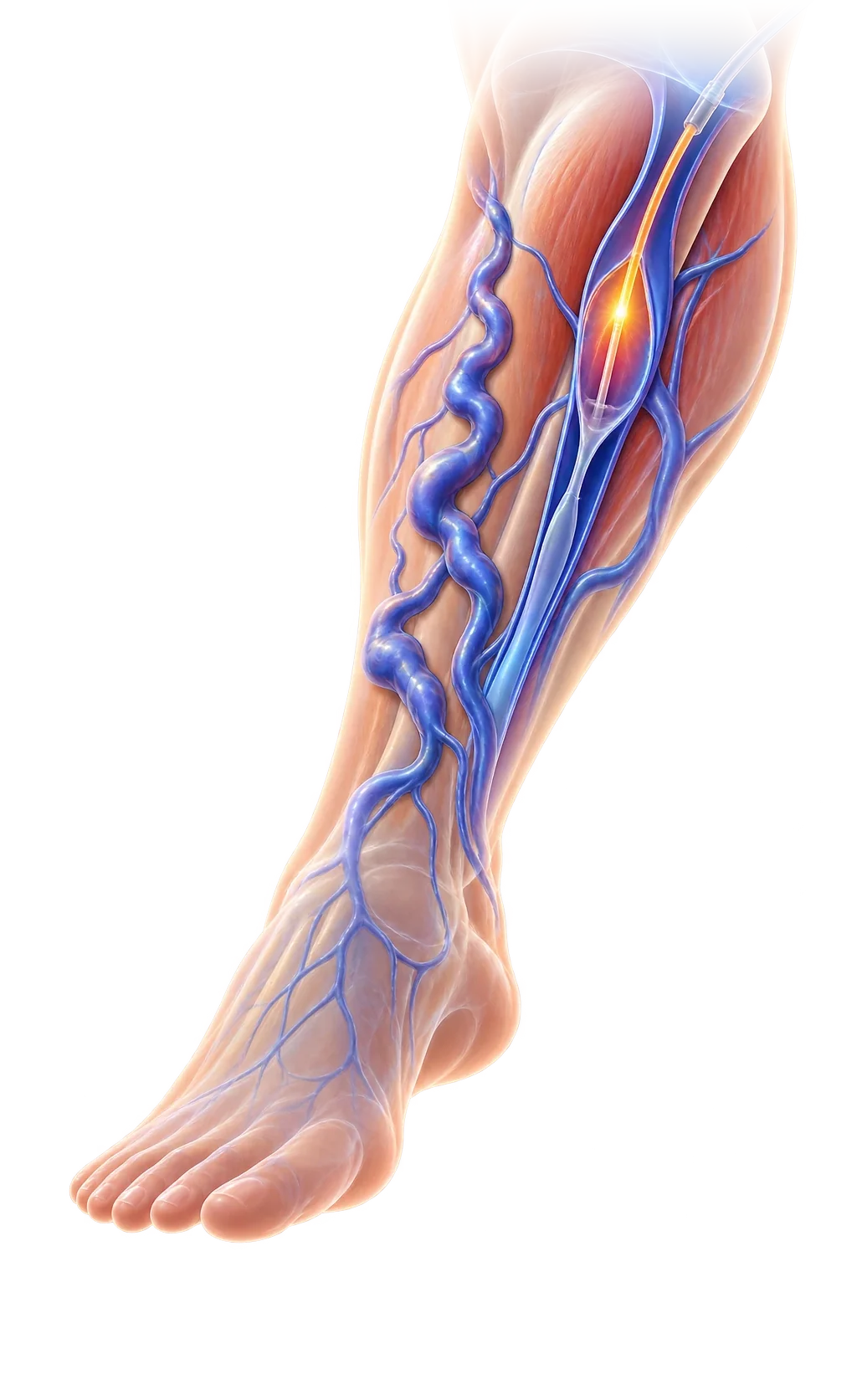
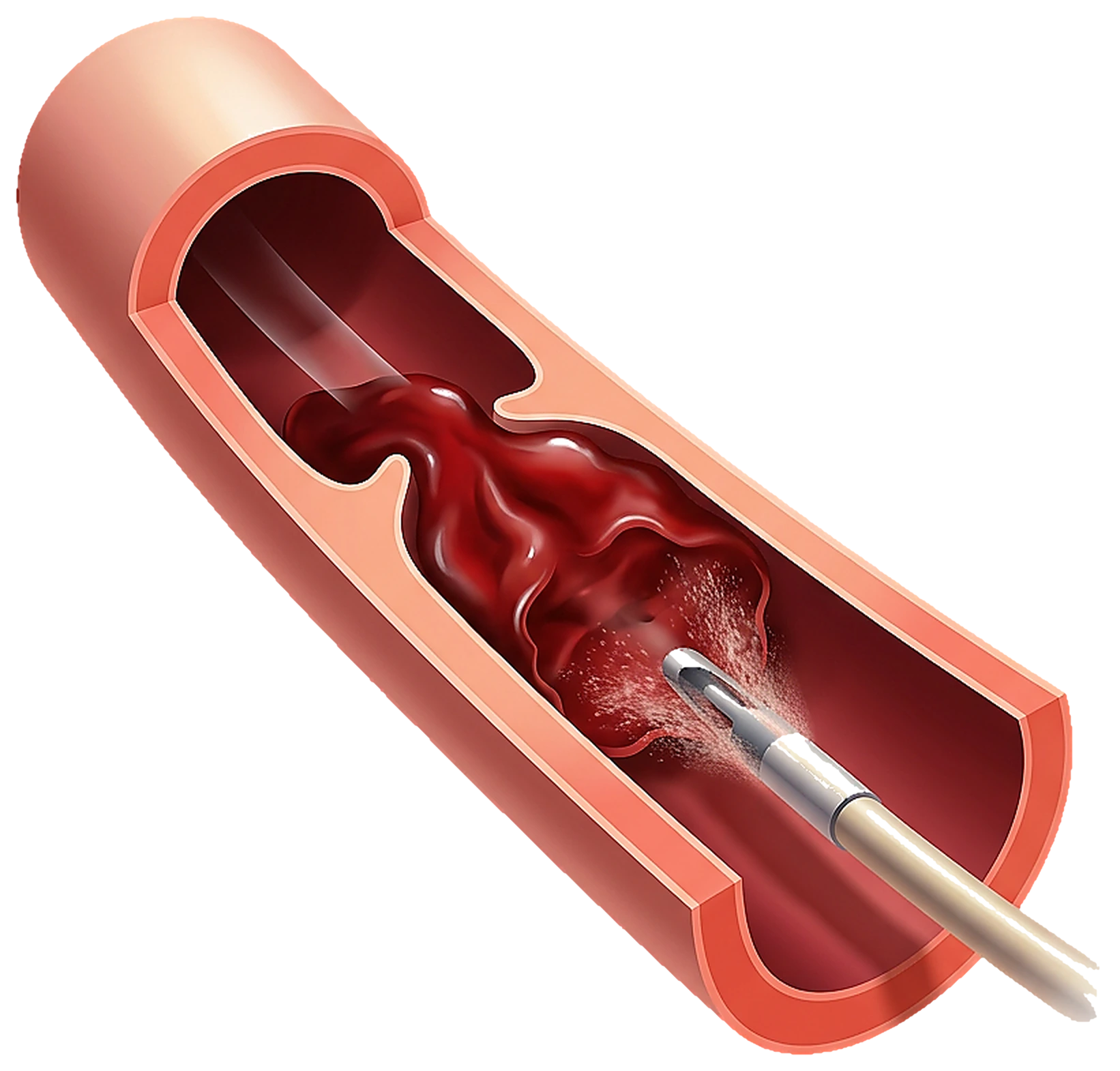
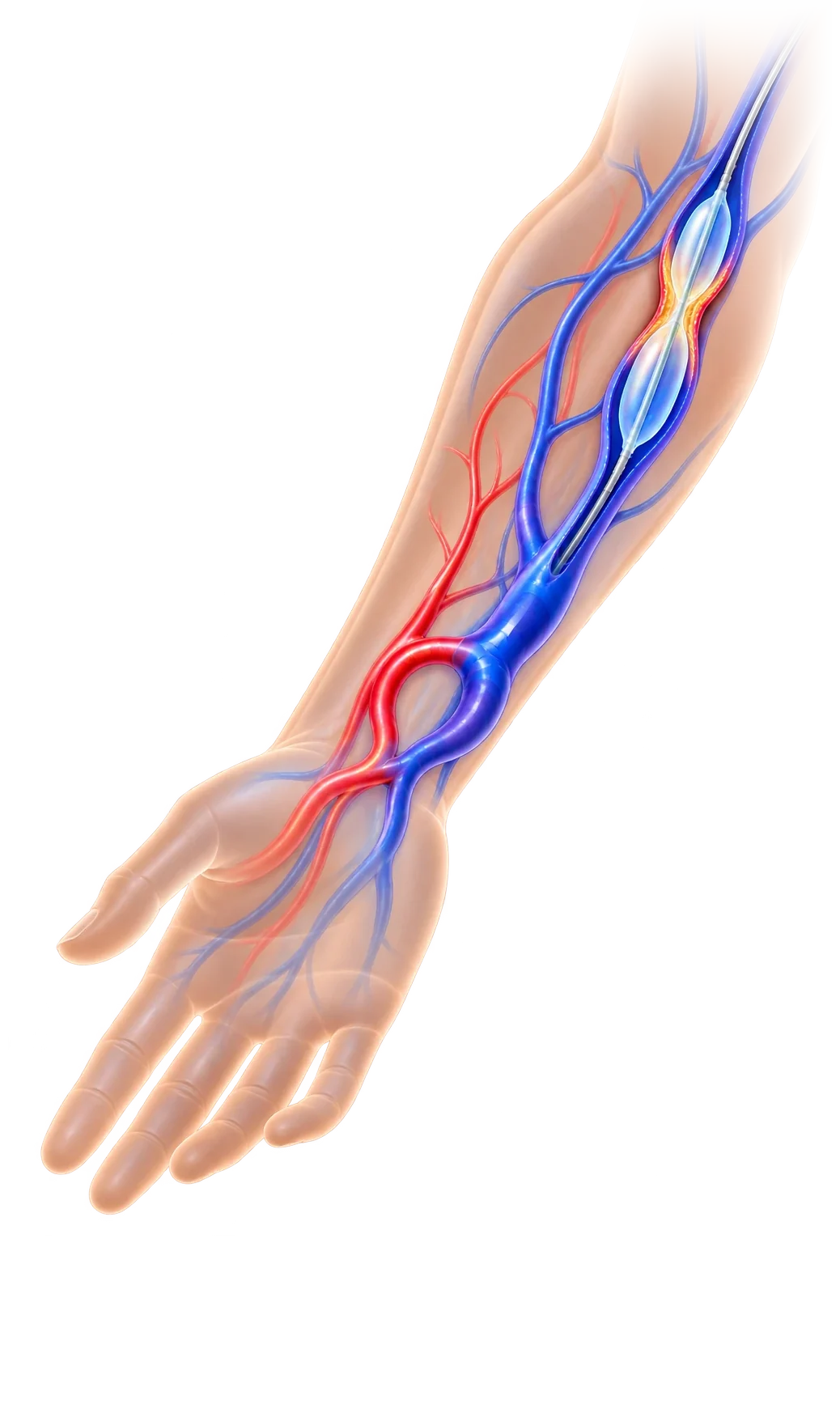
Genicular Artery Embolization (GAE) is an image-guided treatment for knee osteoarthritis pain performed by an Interventional Radiologist. At Clinic Seven in Hyderabad, a thin catheter is passed through a small puncture at the wrist or groin to the genicular arteries around the knee, and tiny particles are used to close the small branches that feed the inflamed joint lining (synovium). This lowers the blood flow that sustains the inflammation and pain.
GAE does not regrow cartilage. It is considered for people with mild to moderate osteoarthritis whose knee pain has not improved after at least three months of proper treatment such as exercise, medicines and injections, and who are not ready for, or do not want, knee replacement. The evidence is promising but still emerging: a 2026 pooled analysis of 45 mostly uncontrolled studies showed meaningful pain reduction, while small sham-controlled trials gave more cautious results, so honest counselling matters.
- Targets the inflamed joint lining that drives knee pain, through a needle-sized puncture.
- Done as a day-care procedure under local anaesthetic, with no incision and no stitches.
- Pooled studies of 2,205 patients showed pain scores falling by about 37 points on a 100-point scale at 12 months, though most were uncontrolled.
- Most commonly reported effects are temporary skin discolouration and bruising.




Personalized scenarios are presented during consultation. Individual results may vary.
Symptoms of Knee Osteoarthritis
Knee osteoarthritis tends to creep up over years. GAE is considered when pain from it is limiting your life despite proper treatment:
- Knee pain on walking, climbing stairs or standing for long
- Pain that disturbs sleep or flares at night
- Stiffness after rest, especially in the morning
- Swelling or warmth around the knee
- Reduced distance you can walk without stopping
- Pain that has not settled after exercise, medicines and injections
- A knee that is painful but not yet at the stage for replacement
If these symptoms sound familiar, book an evaluation with Dr. Nagateja Bonala at Clinic Seven, Hyderabad.
- •Advanced bone-on-bone osteoarthritis with severe deformity, where knee replacement is usually better
- •Knee pain mainly from inflammatory arthritis or another cause
- •Active infection, serious contrast allergy or poor kidney function
- •Pregnancy, or severe artery disease in the leg
How the GAE procedure works
Every step is planned and performed under image guidance by an Interventional Radiologist at Clinic Seven, Hyderabad.
- 01
Assessment
Examination, X-ray or MRI and kidney function confirm osteoarthritis as the cause of pain.
- 02
Access
A thin catheter is passed through a small puncture at the wrist or groin to the arteries around the knee.
- 03
Embolization
Contrast dye shows the inflamed lining, and tiny particles close the small feeding arteries.
- 04
Recovery
You walk out the same day and keep up your exercises, with follow-up to check progress.
GAE vs joint injections and knee replacement
| Factor | GAE | Injections / Knee replacement |
|---|---|---|
| Access | A needle-sized puncture at the wrist or groin | A needle in the joint, or a large knee incision for replacement |
| Anaesthesia | Local anaesthesia with light sedation if needed | Local for injections, general or spinal for replacement |
| What it does | Reduces inflammation of the joint lining to ease pain | Injections give short-term relief, replacement removes the worn joint |
| Hospital stay | Same day | Same day for injections, several days for replacement |
| Best for | Mild to moderate disease with pain that has not responded to care | Injections for flares, replacement for advanced disease |
| Evidence | Emerging, mostly uncontrolled studies and small sham-controlled trials | Established, with long-term data |
The right choice depends on your scans, symptoms and goals. Your Interventional Radiologist will talk you through both options at your consultation.
Recovery timeline
Most patients treated at Clinic Seven follow a predictable recovery path with a follow-up review scheduled at the first visit.
- Walk out the same day, with some soreness or a bruise at the puncture site.
- Skin discolouration or mild pain around the knee for days to weeks is common and settles.
- Avoid strenuous activity for the period advised, and continue your exercise programme.
Risks and safety
Every procedure carries some risk. These are the ones your Interventional Radiologist will review before GAE.
- Bruising or a small haematoma at the puncture site.
- Temporary skin discolouration or soreness around the knee.
- Rare closure of a non-target artery or a reaction to the contrast dye.
What affects the cost
The cost of genicular artery embolization in Hyderabad depends on the number of arteries treated, the embolic material used and the day-care facility. Because the treatment is newer, insurance cover varies between policies and is checked before the procedure, and is never assumed. The exact cost is explained after consultation and review of your imaging.
For a personalised estimate and insurance guidance, contact Clinic Seven with your recent reports.
- Whether one or both knees are treated
- Type of embolic material used
- Pre-procedure imaging and blood tests
- Day-care facility and room category
- Insurance, cashless approval and TPA processing
Get a rough idea of the cost
Choose what matters to you and we will show a guide. Nobody is committed to anything, and our team will never rush you.
Cost details
Amounts are for a shared room and are a starting point. The final cost is confirmed after consultation and review of your scans, and insurance may reduce what you pay.
| Treatment | Procedure | Cost, shared room (INR) |
|---|---|---|
| Genicular Artery Embolization (GAE) | Standard procedure | ₹1,00,000 |
Room choice changes the amount: Shared room is the base amount; Single private room adds 15%; Deluxe single room adds 30%; Suite adds 50%.
Is your insurance accepted?
Cashless with major insurers, TPAs and office group policies. CGHS and Singareni on credit.
Popular searches
Cover is confirmed by our team after checking your policy and treatment plan.
View all insurersDr. Nagateja Bonala
Dr. Nagateja Bonala is the Interventional Radiologist at Clinic Seven, Hyderabad, with 13+ years of image-guided practice. Every GAE case is planned personally with a review of your scans and reports.
Plan your next step
Bring your recent scans, blood tests and any prior specialist notes. Message us on the contact page for directions, timings and insurance guidance.
Questions about GAE
GAE is an image-guided procedure in which a catheter closes tiny arteries around the knee that feed an inflamed joint lining, to reduce the pain of knee osteoarthritis. It is done through a small puncture, with no incision.
No. It does not regrow cartilage. It aims to reduce pain by lowering the inflammation of the joint lining, so that you can move and exercise more.
It is promising but still emerging. A 2026 meta-analysis of 45 mostly uncontrolled studies and 2,205 patients found pain scores fell by about 37 points on a 100-point scale at 12 months, but the certainty of evidence was very low to low. Small sham-controlled trials showed short-term relief with mixed results on some measures, and larger trials are needed.
People with mild to moderate knee osteoarthritis confirmed on imaging, whose pain has not improved after at least three months of proper treatment, and who want to delay or avoid knee replacement. Advanced bone-on-bone disease usually needs knee replacement instead.
It is done under local anaesthetic, so you feel a pinch at the puncture. Some people have soreness or a bruise afterwards, and mild pain or skin discolouration around the knee can last days to weeks.
The commonest effects are temporary skin discolouration (about 11% in a pooled analysis) and a small haematoma (about 3%). Rare problems include closure of a non-target artery and reaction to contrast dye. Your doctor explains your own risk.
Yes. GAE does not rule out knee replacement later if your disease progresses.
Yes. Clinic Seven, Hyderabad offers consultation for genicular artery embolization with Dr. Nagateja Bonala. Suitability is decided after examination and review of your imaging, and insurance cover is checked before the procedure.
Related treatments at Clinic Seven
Minimally invasive, image-guided options by Dr. Nagateja Bonala in Hyderabad.