DVT Treatment & Clot Removal in Hyderabad Restore flow.
Move forward.
Specialist assessment and minimally invasive clot treatment when appropriate.
A clear path through urgent vein care.
Your treatment plan depends on clot location, symptoms, and medical history.
AngioJet mechanical thrombectomy removes deep vein clots quickly, reducing leg damage, preventing post-thrombotic syndrome, and getting you back on your feet.
About DVT Treatment
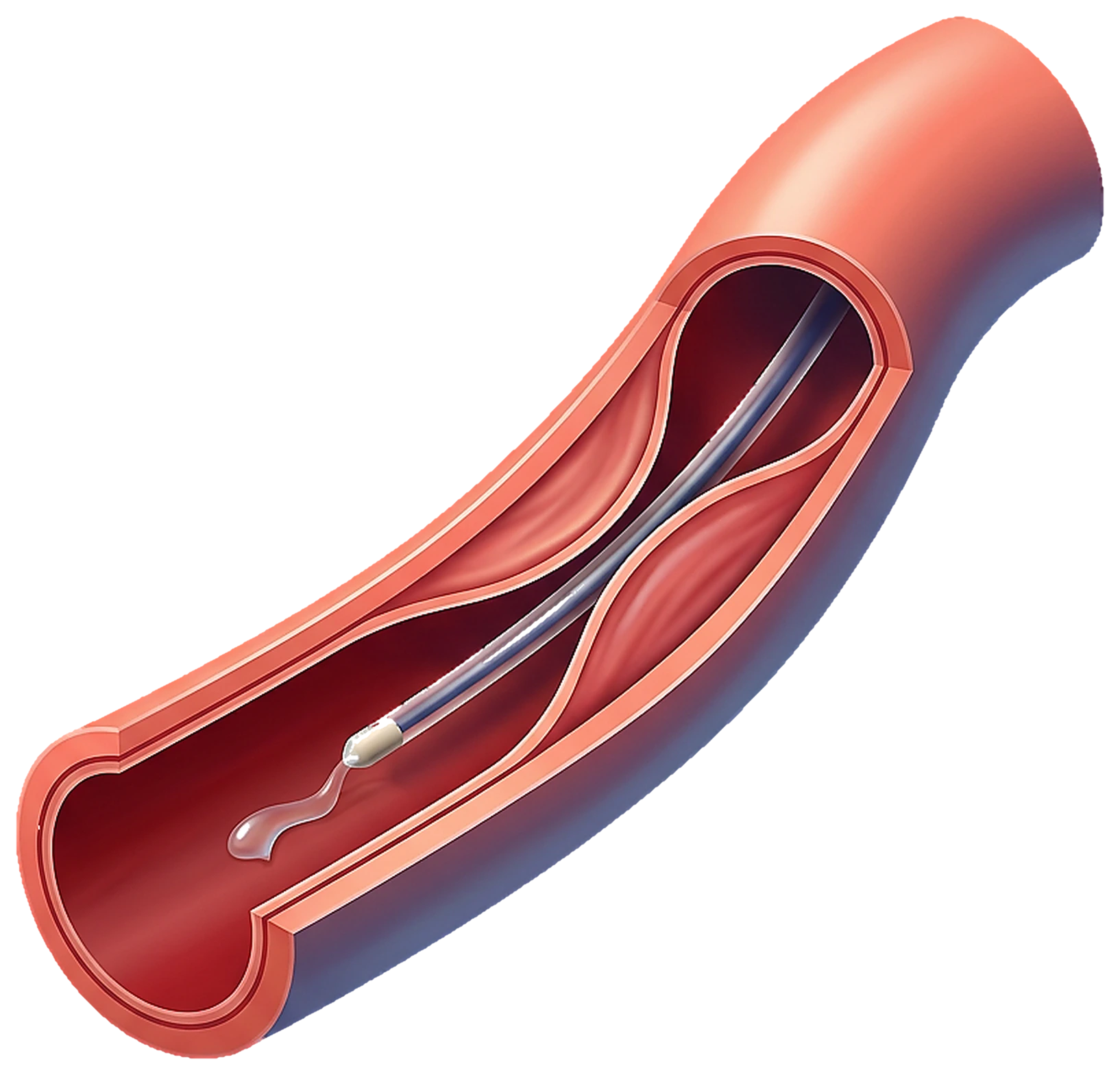
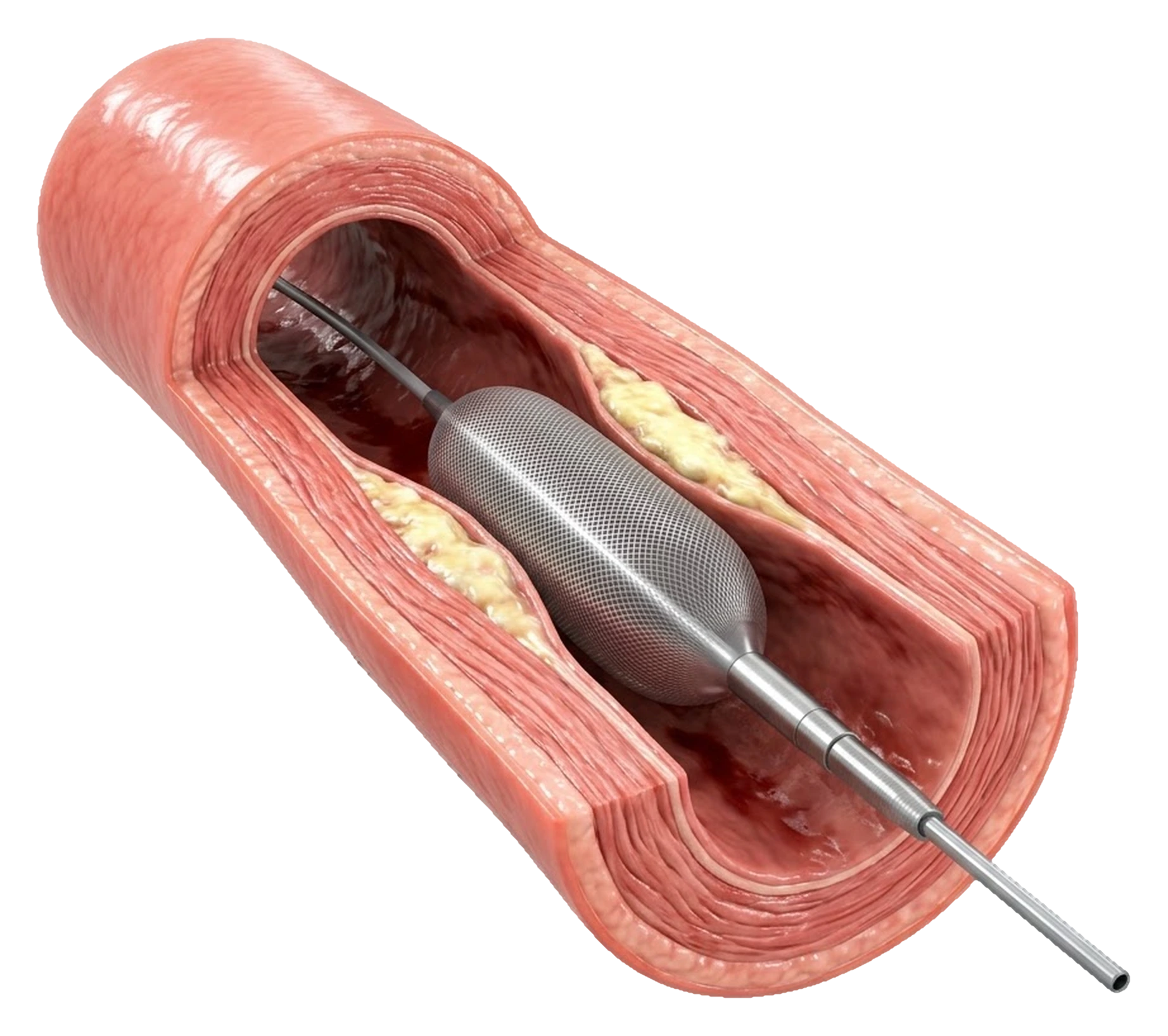
Deep Vein Thrombosis (DVT) is a blood clot in the deep leg or pelvic veins, and it can cause acute leg swelling and pain, chronic post-thrombotic syndrome (PTS) with heaviness, skin darkening and venous ulcers, or life-threatening pulmonary embolism (PE) if the clot travels to the lungs. At Clinic Seven in Hyderabad, an Interventional Radiologist treats extensive or high-risk DVT using catheter-directed thrombolysis and AngioJet mechanical thrombectomy through a small vein puncture under image guidance. This rapidly removes the clot, restores flow, protects the deep vein valves, and, when an underlying narrowing such as May-Thurner syndrome is found, is completed with a venous stent.
Anticoagulation is continued afterwards as per CHEST and ACC guidance. Prompt treatment reduces long-term leg damage and the risk of pulmonary embolism.
- Rapid catheter-based clot removal for extensive or iliofemoral DVT.
- Protects venous valves and reduces post-thrombotic syndrome.
- Diagnoses and treats May-Thurner syndrome with a venous stent.
- Combined with anticoagulation as per CHEST and ACC guidance.




Personalized scenarios are presented during consultation. Individual results may vary. The <1% complication rate is based on our own data; individual risks vary.
Symptoms of Deep Vein Thrombosis (DVT)
DVT is a clot in the deep leg or pelvic veins and can be an emergency. Seek same-day assessment for:
- Sudden swelling of one leg or the whole limb
- Calf or thigh pain, tightness or cramping
- Warmth and redness over the affected leg
- Skin that looks reddish, bluish or shiny
- Prominent surface veins
- Heaviness that worsens through the day
- Breathlessness or chest pain, which can signal a pulmonary embolism and is a medical emergency
If these symptoms sound familiar, book an evaluation with Dr. Nagateja Bonala at Clinic Seven, Hyderabad.
- •Small below-knee DVT, often managed with blood thinners alone
- •Very high bleeding risk that rules out thrombolysis
- •Old, chronic, organised clots
- •Presentation too late for safe clot removal
How the DVT Treatment procedure works
Every step is planned and performed under image guidance by an Interventional Radiologist at Clinic Seven, Hyderabad.
- 01
Assessment
Doppler and CT venography confirm clot extent and underlying anatomy.
- 02
Access
A catheter is guided into the affected vein through a small puncture.
- 03
Thrombectomy
The AngioJet catheter aspirates and breaks up the clot in one session.
- 04
Stenting
If an underlying narrowing is found, a stent restores durable flow.
Catheter clot removal vs blood thinners alone
| Factor | DVT Treatment | Anticoagulation alone |
|---|---|---|
| Approach | Removes the clot directly | Prevents the clot from growing |
| Extensive iliofemoral DVT | Restores flow quickly | Clot clears slowly on its own |
| Vein valve damage / PTS | Reduced | Higher risk of long-term swelling |
| Underlying narrowing (May–Thurner) | Treated with a stent | Not addressed |
| Speed of relief | Rapid | Gradual |
| Blood thinners afterwards | Yes | Yes |
The right choice depends on your scans, symptoms and goals. Your Interventional Radiologist will talk you through both options at your consultation.
Recovery timeline
Most patients treated at Clinic Seven follow a predictable recovery path with a follow-up review scheduled at the first visit.
- Hospital observation for 1-2 days.
- Blood thinners as advised.
- Stockings and follow-up scan.
Risks and safety
Every procedure carries some risk. These are the ones your Interventional Radiologist will review before DVT Treatment.
- Bleeding at the access site.
- Transient blood in urine after AngioJet use.
- Rare vessel injury requiring further intervention.
What affects the cost
The cost of catheter-directed DVT treatment in Hyderabad depends on the clot burden, whether AngioJet thrombectomy and a venous stent are used, and the length of stay. Emergency DVT treatment is covered by most insurance plans.
For a personalised estimate and insurance guidance, contact Clinic Seven with your recent reports.
- Extent of the clot
- AngioJet thrombectomy versus thrombolysis
- Venous stent if May–Thurner is found
- ICU or ward stay
- Doppler and CT venography
- Insurance and cashless approval
Get a rough idea of the cost
Choose what matters to you and we will show a guide. Nobody is committed to anything, and our team will never rush you.
Is your insurance accepted?
Cashless with major insurers, TPAs and office group policies. CGHS and Singareni on credit.
Popular searches
Cover is confirmed by our team after checking your policy and treatment plan.
View all insurersDr. Nagateja Bonala
Dr. Nagateja Bonala is the Interventional Radiologist at Clinic Seven, Hyderabad, with 13+ years of image-guided practice. Every DVT Treatment case is planned personally with a review of your scans and reports.
Plan your next step
Bring your recent scans, blood tests and any prior specialist notes. Message us on the contact page for directions, timings and insurance guidance.
Questions about DVT Treatment
Yes. DVT can be dangerous because part of the clot may travel to the lungs and cause pulmonary embolism (PE). Sudden leg swelling, calf pain, redness or breathlessness must be assessed on the same day.
Most DVTs are treated with blood thinners (anticoagulants). Extensive iliofemoral DVT, phlegmasia and high-risk clots are also considered for catheter-directed thrombolysis or mechanical thrombectomy to protect the vein valves and reduce long-term swelling.
AngioJet is a catheter-based device that uses high-velocity saline jets to break the clot and simultaneously aspirate it out through the same catheter under image guidance, often combined with a small dose of clot-dissolving medicine.
May-Thurner syndrome is a common cause of left-sided iliac vein DVT in which the right iliac artery compresses the left iliac vein. When identified, a venous stent is placed after clot removal to keep the vein open and reduce recurrence.
Yes. Blood thinners are continued for at least 3 months, and sometimes longer, based on the cause of the DVT, bleeding risk and follow-up ultrasound findings.
Clearing the clot early protects the one-way valves inside the deep veins. Damaged valves cause the chronic swelling, heaviness, skin darkening and ulcers of post-thrombotic syndrome, so preserving them matters.
For extensive iliofemoral DVT, catheter-based clot removal is most effective within the first 14 days, ideally in the first week, per CHEST guidance. Earlier treatment better protects the vein valves.
Yes. Clinic Seven, Hyderabad offers 24 hour catheter-directed DVT treatment including AngioJet thrombectomy and venous stenting by Dr. Nagateja Bonala.
Related treatments at Clinic Seven
Minimally invasive, image-guided options by Dr. Nagateja Bonala in Hyderabad.