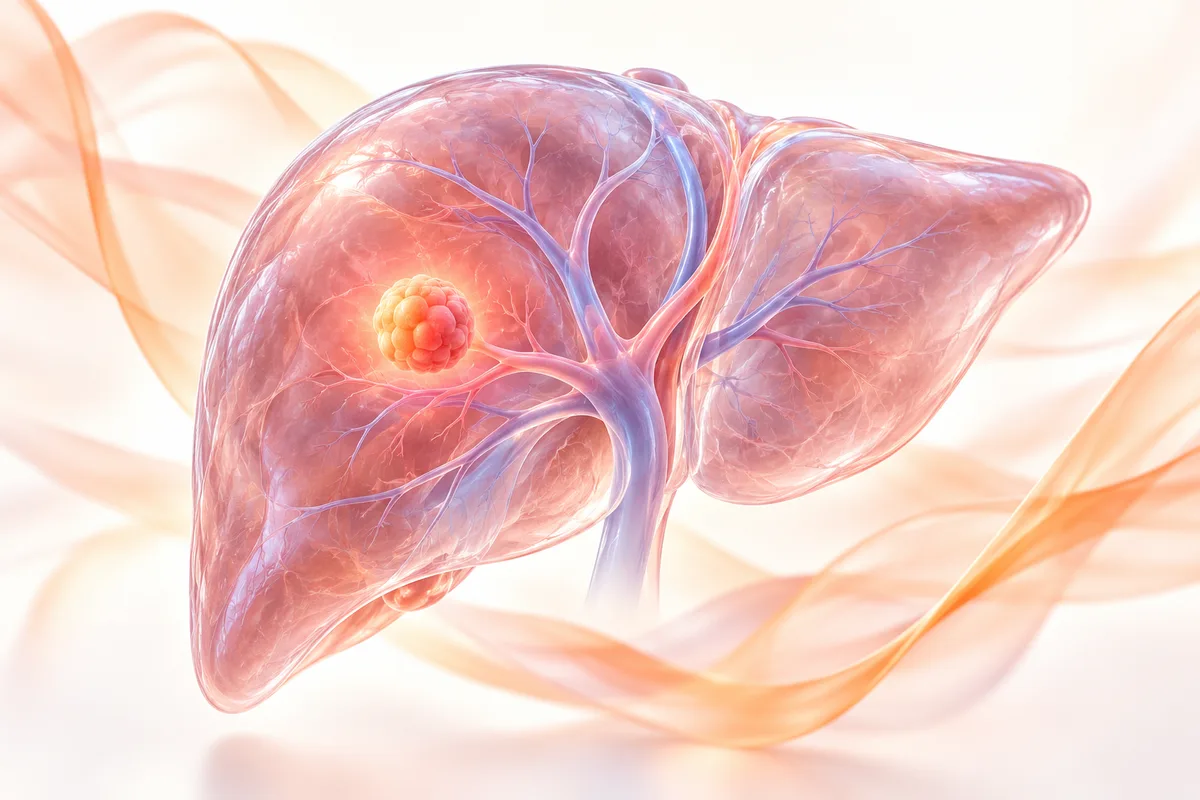
Patient guide
Liver cancer treatment without major surgery: ablation, TACE and TARE explained
How liver tumours are treated beyond resection and transplant: microwave ablation, TACE (conventional, DEB, balloon-occluded) and TARE (Y-90), which stage each is used for, and how to get a second opinion in Hyderabad.
Liver tumour options at a glance
- No large incisionNeedle or catheter treatment
- Stage decidesBCLC staging guides the choice
- Short stayOften one to two nights
- Tumour boardChoice made on your own scans
- RepeatableResponse checked on scans



Treatment is chosen by stage and liver function
The treatment of hepatocellular carcinoma (HCC) depends on the size and number of tumours, how well the liver is working, and your general health. The BCLC system groups patients into stages and recommends treatment for each [1]. The same cancer can therefore be treated very differently in two patients.\n\nImage-guided treatments by an interventional radiologist are part of the standard options, alongside resection, transplant and systemic therapy [1, 2].
Which image-guided treatment for which situation
A general guide. Your tumour board decides what applies to you.
| Treatment | What it is | Usually considered when |
|---|---|---|
| Microwave ablation | A needle antenna heats and destroys the tumour | Small tumours, curative intent, often up to about 3 cm [1, 2] |
| TACE (conventional) | Chemotherapy and embolic material delivered into the artery feeding the tumour | Multiple or larger tumours confined to the liver [1, 2, 3] |
| DEB-TACE | Drug-eluting beads release chemotherapy slowly | Similar to TACE, with a more controlled drug release [4] |
| Balloon-occluded TACE | A balloon in the feeding artery improves drug delivery | Selected tumours where better penetration is wanted [5] |
| TARE (Y-90) | Radioactive microspheres delivered to the tumour | Selected solitary tumours, tumours with vein involvement, or when TACE is not suitable [6, 7] |
Why image-guided treatment is worth asking about
Many people are told only about surgery. These treatments offer more routes:
- No large abdominal incision, treatment through a needle or a catheter.
- Usually a short hospital stay, often one to two nights, and TARE can be a day-care procedure [7].
- They can be repeated, and combined with other treatments, as your response is checked.
- They keep surgery and transplant options open where they apply.
- Treatment is planned with a liver tumour board, so the choice rests on your own scans and liver tests.
What your first visit looks like
Bring your triphasic CT or MRI, AFP and liver function tests, and any earlier reports. Dr. Nagateja Bonala reviews the scans, checks the stage and liver function, and explains which of ablation, TACE, TARE, surgery or systemic therapy suits you, including when another specialist should lead.
Cost and insurance
Health insurance can cover this treatment, subject to your policy terms. The exact cost is calculated after consultation, a complete evaluation of the disease, and a decision on the treatment options. Cashless treatment can be arranged with major Indian health insurers and TPAs, and credit treatment is available for CGHS and Singareni beneficiaries. Eligibility is confirmed after a policy check.
Frequently asked questions
- Can liver cancer be treated without surgery?
- Often yes. Microwave ablation, TACE and TARE are image-guided treatments used according to stage and liver function, alongside resection and transplant [1, 2].
- Which is best, TACE, TARE or ablation?
- None is best for everyone. Ablation is used for small tumours with curative intent, TACE for multiple or larger tumours, and TARE in selected situations [1, 2, 6]. Your scans and liver function decide.
- Is image-guided treatment curative?
- Ablation is a curative-intent treatment for very early and early stage tumours [1, 2]. TACE and TARE control tumours and can shrink them, and are sometimes used to bring patients to surgery or transplant.
- Do I need a liver biopsy before treatment?
- Not always. In cirrhosis, a typical pattern on a triphasic CT or MRI can confirm HCC without biopsy [2]. If a biopsy is needed, a transjugular route is possible.
- How do I get a second opinion on liver cancer treatment in Hyderabad?
- Send your scans and reports to Clinic Seven on WhatsApp at +91 91145 91105, or book a consultation. Dr. Nagateja Bonala reviews them and explains your options.
References
- Reig M, Forner A, Rimola J, et al. BCLC strategy for prognosis prediction and treatment recommendation: The 2022 update. J Hepatol. 2022;76(3):681-693. Read the source
- EASL Clinical Practice Guidelines: Management of hepatocellular carcinoma. J Hepatol. 2018;69(1):182-236. Read the source
- RadiologyInfo.org (RSNA and ACR). Chemoembolization. Read the source
- Lammer J, Malagari K, Vogl T, et al. Prospective randomized study of doxorubicin-eluting-bead embolization in the treatment of hepatocellular carcinoma: results of the PRECISION V study. Cardiovasc Intervent Radiol. 2010;33(1):41-52. Read the source
- Sui WF, Duan YX, Cai ZF, et al. Quantitative literature analysis on efficacy and safety of balloon-occluded transarterial chemoembolization. BMC Gastroenterol. 2025. Read the source
- Salem R, et al. Yttrium-90 Radioembolization for the Treatment of Solitary, Unresectable HCC: The LEGACY Study. Hepatology. 2021. Read the source
- OncoLink. Y-90 Radioembolization Treatment for Liver Tumors. Read the source
Want to discuss your options?
Speak with the Clinic Seven team.