Patient guide
TACE for liver cancer: conventional, DEB and balloon-occluded compared
What TACE (chemoembolization) is, how conventional TACE, drug-eluting bead (DEB) TACE and balloon-occluded TACE differ, what the studies show, recovery, risks and how the cost is worked out.
TACE at a glance
- Direct to the tumourThrough the feeding artery
- No incisionA catheter from wrist or groin
- 3 versionsConventional, DEB, balloon-occluded
- Less liver toxicityWith DEB-TACE (PRECISION V)
- 1 to 2 nightsUsual hospital stay



What TACE is
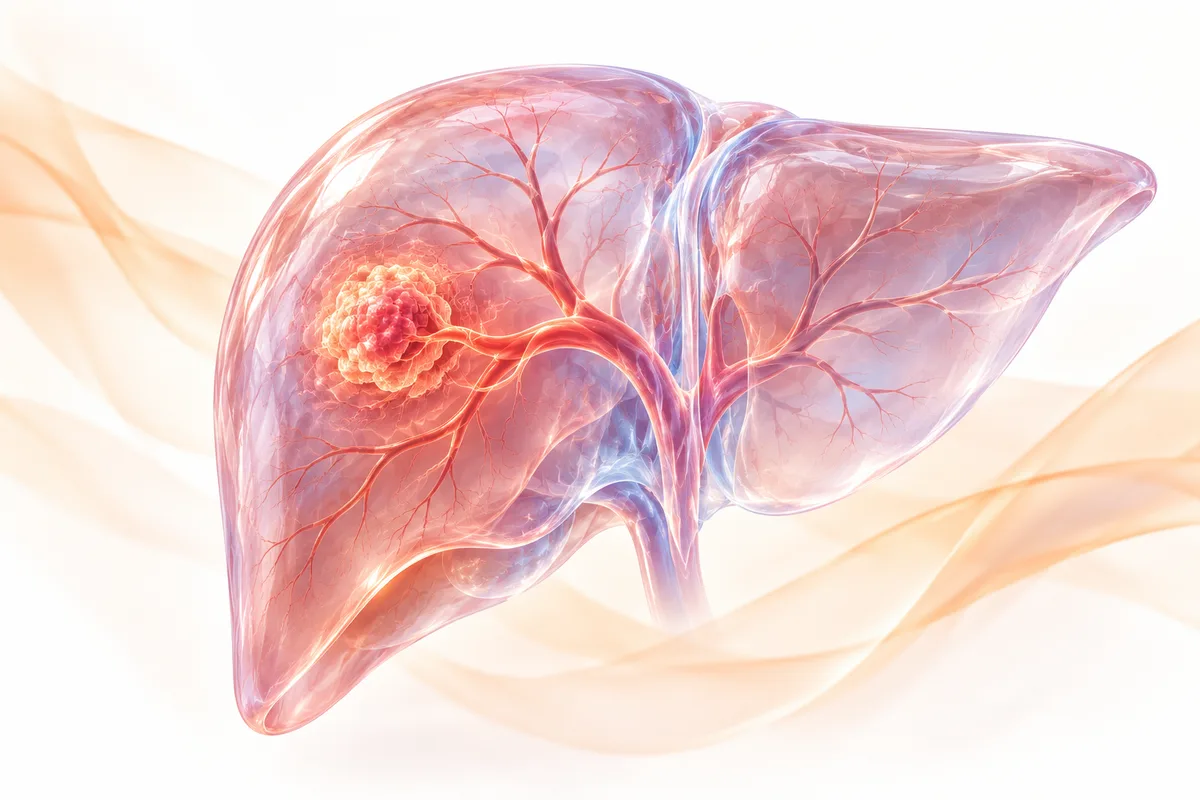
Liver tumours get most of their blood from the hepatic artery, while the healthy liver relies largely on the portal vein. TACE (transarterial chemoembolization) uses this difference. A thin catheter is passed from the wrist or groin to the artery feeding the tumour. Chemotherapy is delivered into it, and the artery is then blocked with embolic material. The tumour is starved of blood and exposed to the drug for longer [1, 2].\n\nIt is done under sedation or light anaesthesia, usually needs one to two nights in hospital, and can be repeated as needed.
Conventional, DEB and balloon-occluded TACE
The three techniques share the same aim and differ in how the drug is delivered.
| Conventional TACE | DEB-TACE | Balloon-occluded TACE | |
|---|---|---|---|
| How the drug is delivered | Chemotherapy mixed with oil (lipiodol), then particles | Beads loaded with chemotherapy that releases slowly | A balloon microcatheter is inflated in the feeding artery during delivery |
| Idea behind it | Established technique | Steadier drug release, less drug in the body | Better drug penetration and retention in the tumour |
| Evidence | The reference technique in trials | Compared directly with conventional TACE in PRECISION V [3] | Higher response in pooled analyses [4, 5] |
What the studies show
PRECISION V randomised 212 patients with unresectable HCC to DEB-TACE or conventional TACE. At six months, the complete response was 27% with DEB-TACE and 22% with conventional TACE, and the objective response was 52% and 44%. This did not meet the statistical target for superiority, but DEB-TACE caused significantly less serious liver toxicity and fewer doxorubicin-related side effects [3].\n\nA 2026 systematic review and network meta-analysis found that DEB-TACE improved objective response compared with conventional TACE (risk ratio 1.36) and that B-TACE improved it further (risk ratio 3.50), with DEB-TACE causing less nausea, abdominal pain and fever [4]. A 2025 analysis likewise found higher complete response rates with balloon-occluded TACE [5].
Lammer et al., Cardiovasc Intervent Radiol 2010, 212 patients [3].
Recovery and what to expect
After TACE, many people have a few days of tiredness, mild fever, nausea or upper abdominal pain, often called post-embolization syndrome. It is expected, treated with medicines, and usually settles within days [1]. A repeat scan after four to six weeks checks the response and decides whether another session is needed.
- Hospital stay is usually one to two nights.
- Most people return to routine within about a week.
- TACE depends on how well the liver is working, so a blood test and scan come first.
- It is used with caution in advanced liver disease, and your team will say so.
Cost
Health insurance can cover this treatment, subject to your policy terms. The exact cost is calculated after consultation, a complete evaluation of the disease, and a decision on the treatment options. Cashless treatment can be arranged with major Indian health insurers and TPAs, and credit treatment is available for CGHS and Singareni beneficiaries. Eligibility is confirmed after a policy check.
Frequently asked questions
- What is the difference between conventional TACE and DEB-TACE?
- Conventional TACE mixes chemotherapy with an oil and follows it with particles. DEB-TACE uses beads that carry the drug and release it slowly. In PRECISION V, DEB-TACE caused significantly less serious liver toxicity and fewer doxorubicin-related side effects [3].
- What is balloon-occluded TACE?
- It is TACE delivered through a microcatheter with an inflatable balloon, which is inflated in the feeding artery during delivery to improve drug retention in the tumour. Pooled analyses report higher response rates [4, 5].
- How many TACE sessions will I need?
- It varies. Some tumours respond to one or two sessions and some need more. A repeat scan after four to six weeks guides whether to repeat.
- Is TACE painful?
- You are comfortable during it. Pain, fever and nausea for a few days afterwards are expected and are treated with medicines [1].
- How much does TACE cost in Hyderabad?
- Health insurance can cover this treatment, subject to your policy terms. The exact cost is calculated after consultation, a complete evaluation of the disease, and a decision on the treatment options.
References
- RadiologyInfo.org (RSNA and ACR). Chemoembolization. Read the source
- Reig M, Forner A, Rimola J, et al. BCLC strategy for prognosis prediction and treatment recommendation: The 2022 update. J Hepatol. 2022;76(3):681-693. Read the source
- Lammer J, Malagari K, Vogl T, et al. Prospective randomized study of doxorubicin-eluting-bead embolization in the treatment of hepatocellular carcinoma: results of the PRECISION V study. Cardiovasc Intervent Radiol. 2010;33(1):41-52. Read the source
- Chen J, Huang G, Mo F, et al. Comparative efficacy and safety of transarterial treatment strategies for hepatocellular carcinoma: a systematic review and network meta-analysis. Front Med. 2026. Read the source
- Sui WF, Duan YX, Cai ZF, et al. Quantitative literature analysis on efficacy and safety of balloon-occluded transarterial chemoembolization. BMC Gastroenterol. 2025. Read the source
Want to discuss your options?
Speak with the Clinic Seven team.