Patient guide
TARE (Y-90 radioembolization) for liver tumours: how it works and who it suits
What TARE (transarterial radioembolization, Y-90) is, how the mapping and treatment visits work, what the LEGACY study showed, when it is chosen over TACE, and how to ask for an opinion.
TARE at a glance
- Radiation from insideBeads placed in the tumour vessels
- Day careUsually home the same day
- 88.3% responseIn the LEGACY study
- Healthy liver sparedDose planned to the tumour
- Two visitsMapping, then treatment


What TARE is
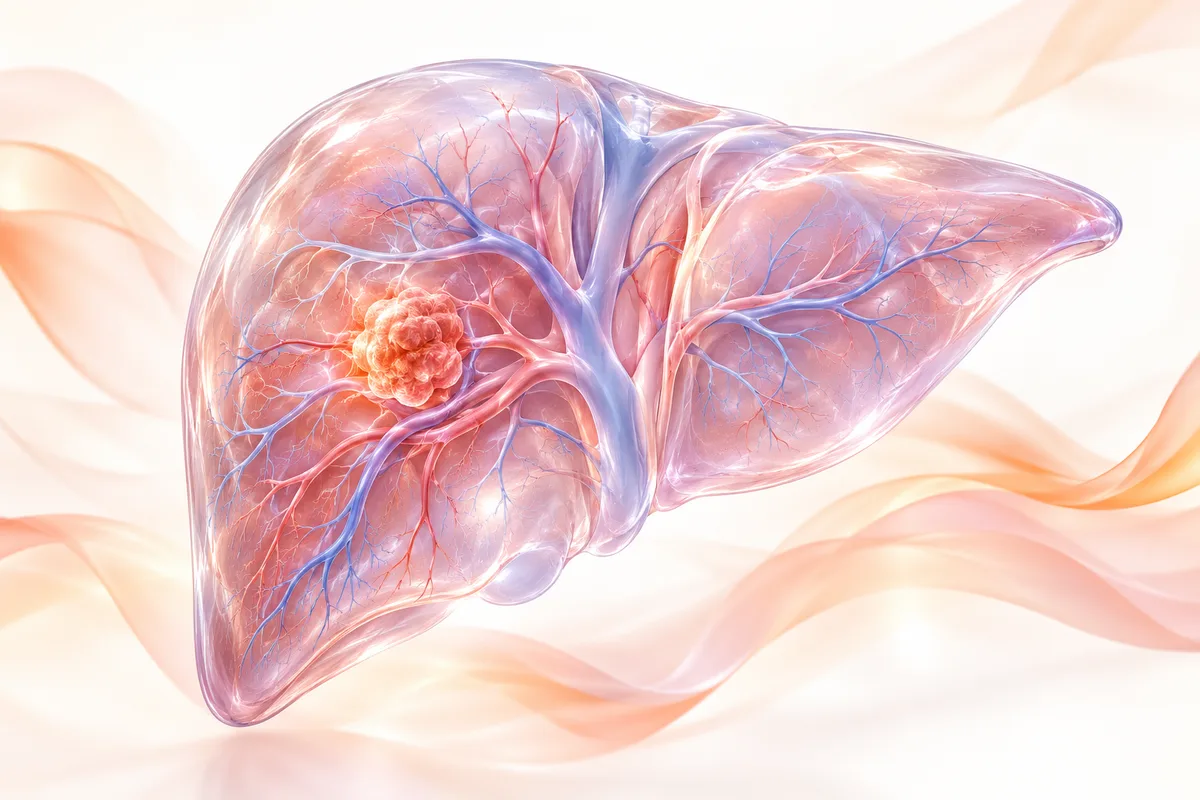
TARE, also called radioembolization, SIRT or Y-90, is an image-guided radiation treatment. Radioactive microspheres of yttrium-90 are injected through a catheter into the hepatic artery branches feeding the tumour. They lodge in the small vessels inside and around the tumour and deliver radiation to it directly. The radiation fades over about two weeks and the beads stay in the liver without causing a problem [1].
How it works in two visits
TARE is planned before it is given.
| Stage | What happens | Why it matters |
|---|---|---|
| Mapping angiogram | A catheter study of the liver arteries, with a test injection tracked by a nuclear scan | Shows if any vessels need to be blocked, and checks how much would reach the lungs [1] |
| Treatment | The Y-90 microspheres are injected over about 15 to 30 minutes | The dose is planned to the tumour, and you can usually go home the same day [1] |
What the evidence shows
LEGACY was a study of 162 patients with a solitary, unresectable HCC treated with Y-90 glass microspheres. Median tumour size was 2.7 cm. The objective response rate was 88.3%, 62.2% had a response lasting at least six months, and three-year overall survival was 86.6% for all patients and 92.8% for those who went on to resection or transplant [2].
Salem et al., Hepatology 2021, 162 patients, single arm [2].
When TARE is considered
These are patterns, not rules. A liver tumour board decides.
- A solitary tumour where a targeted dose to one area of the liver is wanted.
- Tumours that involve a branch of the portal vein, where TACE may carry more risk.
- A need to treat a tumour while keeping surgery or transplant possible later.
- Tumours that have not responded well to TACE.
- Liver metastases from other cancers, in selected cases.
Recovery
Many people feel tired, with mild nausea or upper abdominal discomfort for a few days, and go home the same day [1]. Follow-up scans and blood tests check the response over the following months.
Cost and a second opinion
Health insurance can cover this treatment, subject to your policy terms. The exact cost is calculated after consultation, a complete evaluation of the disease, and a decision on the treatment options. Cashless treatment can be arranged with major Indian health insurers and TPAs, and credit treatment is available for CGHS and Singareni beneficiaries. Eligibility is confirmed after a policy check. Send your scans on WhatsApp for an opinion.
Frequently asked questions
- What is TARE for liver cancer?
- TARE (also called Y-90 radioembolization or SIRT) injects radioactive microspheres into the artery feeding a liver tumour, so it receives a high radiation dose from the inside [1].
- Is TARE better than TACE?
- Neither is better for every patient. TARE is chosen for selected situations, such as solitary tumours or tumours involving a portal vein branch. Your scans and liver function decide.
- Am I radioactive after TARE?
- The radiation from yttrium-90 is short-range and fades over about two weeks. Your team will give simple precautions for contact with others [1].
- Is TARE a day-care procedure?
- The treatment itself is usually day care and patients go home the same day [1]. The mapping visit comes first.
- How much does TARE cost in Hyderabad?
- Health insurance can cover this treatment, subject to your policy terms. The exact cost is calculated after consultation, a complete evaluation of the disease, and a decision on the treatment options.
References
- OncoLink. Y-90 Radioembolization Treatment for Liver Tumors. Read the source
- Salem R, et al. Yttrium-90 Radioembolization for the Treatment of Solitary, Unresectable HCC: The LEGACY Study. Hepatology. 2021. Read the source
- Reig M, Forner A, Rimola J, et al. BCLC strategy for prognosis prediction and treatment recommendation: The 2022 update. J Hepatol. 2022;76(3):681-693. Read the source
Want to discuss your options?
Speak with the Clinic Seven team.