Patient guide
Varicose veins: symptoms, stages and when to see a doctor
How varicose veins progress from spider veins to skin changes and ulcers, the symptoms that matter, what to do at home, and the warning signs that mean you should see a doctor soon or urgently.
Varicose veins at a glance
- Valves failBlood pools in the vein
- StagesFrom spider veins to ulcers
- Duplex scanShows which vein leaks
- Day-care fixLaser or glue
- One swollen legSee a doctor the same day

Watch Dr. Nagateja explain this
Short videos on the same topic, in plain language.
What varicose veins are
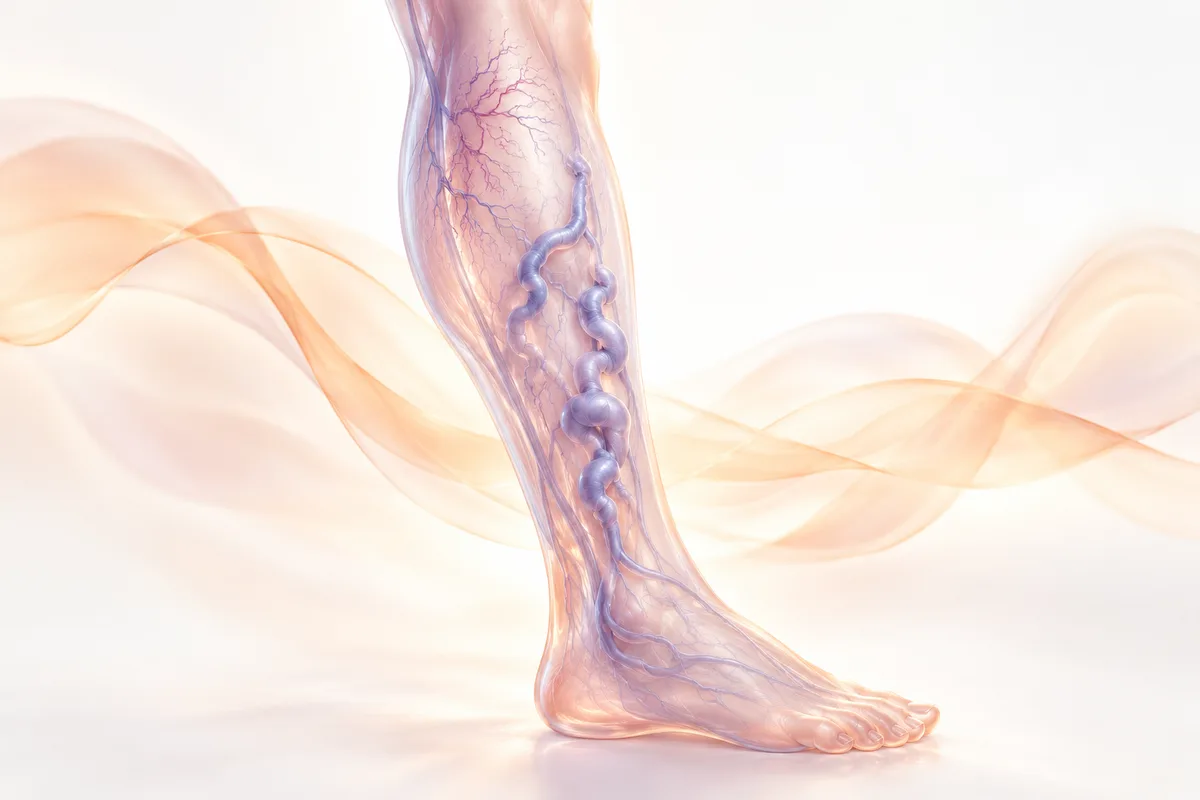
Leg veins carry blood back to the heart, and small one-way valves stop it from falling back down. When those valves fail, blood pools, the vein stretches, and it becomes visible, bulging and twisted [2, 3]. The medical name for the underlying problem is chronic venous insufficiency.
Family history, pregnancy, long hours of standing, age and excess weight all raise the chance of developing them.
The stages, from mild to advanced
Doctors often describe leg vein disease in stages. The exact grading is made by your doctor, but this is the general path.
| Stage | What you may see or feel | What it usually means |
|---|---|---|
| Early | Spider veins or fine blue veins, mild aching | Often cosmetic, can be watched or treated with sclerotherapy |
| Varicose veins | Bulging, twisted veins, heaviness, night cramps | A leaking vein is likely, a duplex scan is worth doing [1] |
| Swelling | Ankle swelling that builds up through the day | Venous pressure is rising, treatment is worth considering |
| Skin changes | Darkening, itching, eczema, hardened skin near the ankle | Advanced disease, treatment is advised [1, 2] |
| Ulcer | A sore near the ankle that heals slowly or keeps returning | Needs prompt specialist treatment of the underlying vein [1] |
Symptoms worth paying attention to
Many people live with these for years before asking for help. None of them needs to be accepted as normal.
- An aching or heavy feeling in the legs that gets worse by evening
- Swollen ankles after standing or sitting for long
- Burning, throbbing or muscle cramps in the calf, often at night
- Itching over the vein, or dry, irritated skin
- Brown or dark patches of skin around the ankle
- A sore or ulcer near the ankle
What you can do at home
These steps ease symptoms and slow things down. They do not remove a vein that is already leaking [1, 2].
- Walk regularly, since calf muscles help push blood upward.
- Raise your legs above heart level for 15-20 minutes a few times a day.
- Avoid standing or sitting still for hours. Move your ankles when you cannot walk.
- Keep a healthy weight.
- Use compression stockings if your doctor advises them.
When to see a doctor, and when to go the same day
Book a consultation if you have constant symptoms, skin changes, repeated swelling, or a sore that is slow to heal. A duplex scan shows exactly which veins are leaking.
Go for same-day care if one leg suddenly becomes swollen, painful, warm or red, because this can be a deep vein clot. Seek emergency help if this comes with chest pain or sudden breathlessness. A varicose vein that bleeds should be pressed firmly with a clean cloth with the leg raised, then seen urgently.
Which doctor treats varicose veins
Interventional radiologists and vascular surgeons both treat varicose veins. What matters most is that the doctor performs vein procedures regularly and does a duplex scan first. Dr. Nagateja Bonala is an interventional radiologist who treats varicose veins with laser and glue closure as day-care procedures at Clinic Seven, Kukatpally.
Frequently asked questions
- Are varicose veins dangerous?
- Often they are not dangerous at first, but they can progress to swelling, skin changes, bleeding, superficial clots and ulcers [1, 2]. A scan tells you where you stand.
- What does a varicose vein ulcer look like?
- It is a shallow, slow-healing sore usually just above the inner ankle, often with darkened, hardened skin around it. It needs a specialist assessment because treating the leaking vein helps it heal and lowers the chance of it returning [1].
- Can exercise cure varicose veins?
- Exercise helps symptoms and circulation, but it cannot close a vein whose valves have failed [1, 2].
- Do varicose veins come back after treatment?
- The treated vein stays closed in most people, but new varicose veins can develop over time because the tendency is partly inherited. Regular follow-up catches them early.
- Is varicose veins treatment painful?
- Modern closure treatments are done under local numbing and most people describe pressure rather than pain. Most go home the same day.
References
- National Institute for Health and Care Excellence. Varicose veins: diagnosis and management (CG168). Read the source
- NHS. Varicose veins: treatment. Read the source
- Cleveland Clinic. Varicose veins: symptoms, causes and treatment. Read the source
- Mayo Clinic. Varicose veins: diagnosis and treatment. Read the source
Want to discuss your options?
Speak with the Clinic Seven team.