
Patient guide
Goitre treatment without surgery: thyroid artery embolization in Hyderabad
How thyroid artery embolization shrinks a large goitre with multiple nodules through a tiny tube from the wrist, with no neck cut or scar. Who it suits, results, recovery, side effects and how it compares with ablation and thyroid surgery.
Why people choose it
- No neck cutTiny puncture at the wrist
- Whole goitreAll nodules treated at once
- Local anaesthesiaNo general anaesthesia
What a goitre is
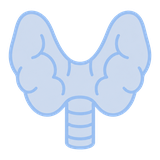
A goitre is an enlarged thyroid. When it is full of lumps it is called a multinodular goitre. Most of these lumps are not cancer, but as the goitre grows it can cause a visible swelling in the neck, difficulty swallowing tablets or food, a choking feeling when lying flat, breathlessness, or a change in the voice. Some goitres also make too much thyroid hormone, causing palpitations, weight loss and tremor.
The usual treatment for a large goitre has been an operation to remove part or all of the thyroid. Thyroid artery embolization is a way to shrink it without that operation.
How thyroid artery embolization works
The thyroid is fed by four small arteries, two on each side. A goitre depends on this blood supply to stay large.
Under local anaesthetic, Dr. Nagateja Bonala passes a very thin tube from an artery at the wrist up to the thyroid arteries, watching on X-ray. Tiny particles are released into the arteries feeding the goitre. Usually two or three of the four arteries are treated, so some healthy blood supply is kept. With less blood, the goitre shrinks steadily over the next months.
Who it suits best
Thyroid artery embolization is a strong option if:
- Your goitre is large, with multiple nodules, too many to treat one by one with a needle.
- The goitre presses on your throat: trouble swallowing, a choking feeling lying flat, or breathlessness.
- The goitre reaches down behind the breastbone into the chest (retrosternal goitre).
- You want to avoid a neck operation and a scar.
- Surgery or general anaesthesia is risky for you because of heart or lung problems or older age.
- You have an overactive multinodular goitre and want to avoid surgery.
Before the procedure
These tests make sure the goitre is safe to treat this way:
- Thyroid ultrasound, and a CT scan if the goitre reaches into the chest.
- Thyroid blood tests: TSH, T3 and T4.
- FNAC (a fine-needle test) of the main nodules to rule out cancer.
- Kidney function and a blood count before the X-ray dye is used.
What happens on the day
The procedure takes about 1 to 2 hours. Most people stay one night.
- Comfort: local anaesthetic numbs the wrist, and mild sedation keeps you relaxed. You stay awake.
- Tube in: a very thin tube is guided from the wrist artery up to the thyroid arteries.
- Mapping: X-ray dye shows each artery, so the particles go only where they should.
- Block: tiny particles are released into the arteries feeding the goitre.
- Finish: the tube is removed and a band is placed on the wrist. No stitches.
Results
A single-centre study from Turkey followed 56 people treated with thyroid artery embolization, most with large goitres and many reaching into the chest. Six months later the whole thyroid had shrunk from 147 mL to 63 mL on average and the nodules from 80 mL to 25 mL. The part reaching into the chest shrank by half. Of 22 people with an overactive thyroid (not Graves disease), 19 had normal thyroid levels afterwards [1].
A 2026 study compared embolization with radiofrequency ablation for large goitres. For goitres over 100 mL, embolization shrank them by 63% against 50% with ablation, and complications were less common (5.3% against 14.0%) [2].
Yilmaz et al., J Vasc Interv Radiol 2021, 56 patients [1].
Embolization, ablation or surgery
All three can treat a troublesome goitre. They suit different goitres.
| Surgery | Needle ablation | Embolization | |
|---|---|---|---|
| Cut | Neck cut and scar | None, needle in the neck | None, tiny puncture at the wrist |
| Best for | Suspected cancer | One or a few nodules | Large goitre with multiple nodules |
| Anaesthesia | General | Local | Local with mild sedation |
| Thyroid tablets after | Lifelong if the whole gland is removed | Usually not needed | Usually not needed |
| Hospital stay | 2 to 3 days | Same day | 1 night |
Recovery and side effects
Most people are back to their routine in about a week.
- Days 1 to 5: neck ache, mild swelling and a low fever as the goitre reacts. Eased with tablets.
- First weeks: a short rise in thyroid hormone can cause palpitations. It settles on its own or with a short course of tablets.
- Months 1 to 3: pressure and swallowing ease as the goitre shrinks.
- Months 3 and 6: thyroid blood tests and an ultrasound check the response.
- Rare: an underactive thyroid needing tablets, low calcium, or particles reaching an unintended artery. Careful X-ray mapping of each artery before injecting is what keeps these rare.
Just one or two nodules?
When there are only one or two nodules, radiofrequency or microwave ablation treats each one directly through a fine needle in the neck, as a day procedure. Embolization is kept for goitres that are large, full of nodules or reaching into the chest. Our guide on embolization and ablation explains the difference in more detail.
Your consultation
Bring your thyroid ultrasound or CT, thyroid blood tests (TSH, T3, T4) and FNAC report. Dr. Nagateja Bonala checks the size of the goitre, its nodules and its blood supply, and tells you whether embolization, ablation or another route fits you best.
Frequently asked questions
- Can a goitre be treated without surgery?
- Yes. Thyroid artery embolization shrinks a large goitre by blocking the arteries that feed it, through a tiny tube from the wrist. There is no cut on the neck. For one or two nodules, needle ablation is another non-surgical option.
- How much will my goitre shrink?
- In a series of 56 patients, the thyroid was about 57% smaller and the nodules about 69% smaller at 6 months. Pressure and swallowing usually ease before it has finished shrinking.
- Will I need thyroid tablets for life after embolization?
- Usually not. Only the arteries feeding the goitre are blocked and some healthy blood supply is kept, so most people keep normal thyroid function. Blood tests are checked afterwards and tablets are started only if needed.
- Can it treat a goitre that goes into the chest?
- Yes. Goitres that reach behind the breastbone are one of the main reasons people choose embolization. In the 56-patient series, most goitres reached into the chest and that part shrank by about half in 6 months.
- Will my voice change?
- The voice nerve runs right next to the thyroid and is at risk in neck surgery. Embolization works from inside the arteries without touching the neck, so the nerve is not handled.
- Is thyroid artery embolization available in Hyderabad?
- Yes. Dr. Nagateja Bonala, Interventional Radiologist, offers thyroid artery embolization for goitre at Clinic Seven, Kukatpally, Hyderabad.
References
- Yilmaz S, et al. Thyroid Embolization for Nonsurgical Treatment of Nodular Goiter: A Single-Center Experience in 56 Consecutive Patients. J Vasc Interv Radiol. 2021;32(10):1449-1456. Read the source
- Lee YJ, et al. Transarterial embolization outperforms radiofrequency ablation for thyroid goiters exceeding 100 mL: a study on efficacy and safety. Eur Radiol. 2026;36(1):708-718. Read the source
- Sag AA, et al. Thyroid Artery Embolization for Benign Thyroid Hyperplasia. J Clin Med. 2026;15(7):2664. Read the source
- Coerts HI, et al. Thyroid Arterial Embolization for the Management of Benign and Malignant Thyroid Disease: A Systematic Review. Endocr Pract. 2026;32(1):67-76. Read the source
Want to discuss your options?
Speak with the Clinic Seven team.