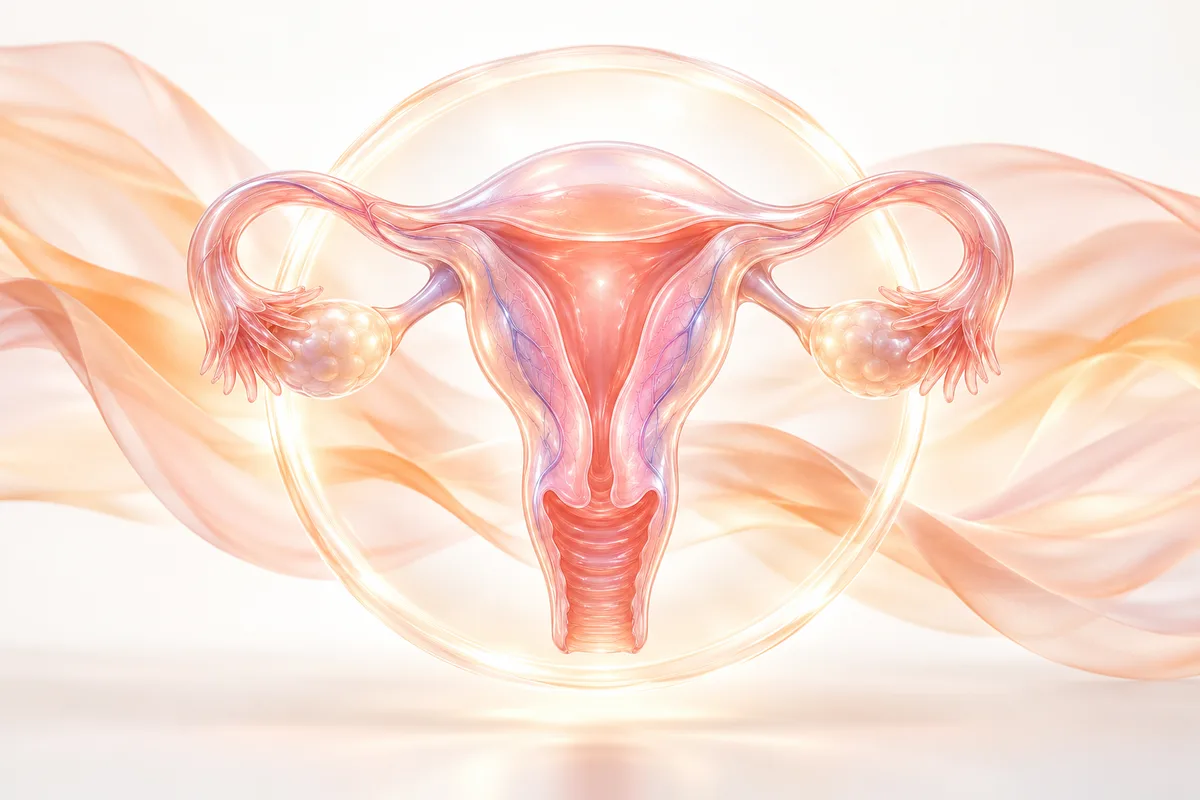
Patient guide
Alternatives to hysterectomy for fibroids and adenomyosis in Hyderabad
Told you need a hysterectomy for fibroids, adenomyosis or a bulky uterus? Compare hysterectomy, myomectomy and uterine artery embolization (UFE) side by side, with recovery timelines, trial evidence and a free WhatsApp second opinion.
Advantages over surgery at a glance
- Keep your uterusNothing is removed
- No cuts, no stitchesA pinhole entry
- 1 vs 5 daysHospital stay, UFE vs surgery
- Faster recoveryBack to work sooner
- 65% at 10 yearsStill had their uterus (EMMY)
- 78% satisfiedTen years after UFE (EMMY)



Watch Dr. Nagateja explain this
Short videos on the same topic, in plain language.
Is a hysterectomy always necessary?
No. A hysterectomy removes the uterus and ends periods for good, so it solves the problem completely, but it is major surgery with a long recovery and it cannot be undone. For fibroids, current guidance describes several options, and hysterectomy is one of them, not the default [1]. For adenomyosis, the uterus can often be preserved with a combination of treatments.
If you have been advised a hysterectomy for fibroids, adenomyosis, heavy bleeding or a bulky uterus, it is reasonable to ask whether your scan fits a uterus-preserving option before you consent.
The alternatives, side by side
These are the main ways to treat symptomatic fibroids and adenomyosis. Which ones apply to you depends on your scan, symptoms and plans.
| Hysterectomy | Myomectomy or adenomyoma removal | Uterine artery embolization (UFE) | |
|---|---|---|---|
| What is done | The uterus is removed | Fibroids or the adenomyotic lump are removed, the uterus stays | Blood supply to the fibroids is blocked, the uterus stays [2] |
| Incision | Abdominal or keyhole | Abdominal or keyhole | None. A pinhole entry at the wrist or groin, with no cuts and no stitches |
| Anaesthesia | General | General | Sedation and local numbing |
| Hospital stay | Average 5 days in REST, with surgery [2] | Often several days | Average 1 day in REST [2], same-day discharge at Clinic Seven |
| Periods after | Stop permanently | Continue | Continue, usually lighter |
| Can you carry a pregnancy? | No | Yes, in many women | Not the usual goal, discuss before choosing [5, 6] |
| Can fibroids or symptoms return? | No, the uterus is gone | New fibroids can form | Further treatment was needed in some women over time [4] |
Recovery timeline, hysterectomy vs UFE
Recovery varies with your health and the type of surgery. This is the general pattern, with the trial numbers where they exist.
| When | Hysterectomy | UFE |
|---|---|---|
| Day of procedure | General anaesthesia, drains and pain control, several days in hospital [2] | A few hours of observation, often home the same day |
| First 2 days | Hospital rest, walking with help | Cramping pain controlled with medicines, rest at home |
| First week | Still in early recovery, limited movement | Most women return to desk work and routine at Clinic Seven |
| Weeks 2 to 6 | Gradual return, no lifting or strenuous activity | Back to full activity, first lighter periods |
| After 6 weeks | Many women are recovered, others need longer | Review scan and follow-up visits, shrinkage continues over 3 to 6 months |
Edwards et al., N Engl J Med 2007. Surgery group: 43 hysterectomies and 8 myomectomies.
Hysterectomy vs UFE: what the trials found
The EMMY trial randomised 177 women who were due to have a hysterectomy. After UFE, quality of life improved significantly, and women had significantly better physical scores at six weeks [3]. Ten years later, about 65% of the women treated with UFE had avoided hysterectomy, quality of life was stable and 78% were satisfied [4].
In the REST trial of 157 women, those who had embolization left hospital after an average of 1 day against 5 days after surgery, and returned to work significantly sooner [2]. A Cochrane review of seven randomised trials found UFE to be a safe, minimally invasive alternative to surgery, with similar satisfaction up to two years [5].
de Bruijn et al., Am J Obstet Gynecol 2016.
What about adenomyosis and a bulky uterus?
A bulky uterus on a scan is often fibroids, adenomyosis or both. For adenomyosis, uterine artery embolization alone improves symptoms in most women, with about 76% reporting significant improvement in a 2026 systematic review of 1,701 women [7], but symptoms can return.
At Clinic Seven we follow women after embolization at 1, 3, 6, 12 and 18 months and add a Mirena if symptoms return or the uterine volume rises by more than 10% over 3-6 months from the 3-month baseline. In our own series of 38 carefully selected women followed for up to 5 years, none of the 27 who had a Mirena needed a hysterectomy. Our adenomyosis guide has the details and the limits of this small series.
Clinic Seven's own series, 38 carefully selected women followed for up to 5 years. Not a published trial.
What changes if the uterus is removed
Hysterectomy ends periods and removes the chance of pregnancy, which matters at 35 or 40 as much as it does at 25. Some studies find that menopause may come earlier in women who have had a hysterectomy even when the ovaries are left in place, and removing the ovaries as well causes menopause straight away. These effects are not the same for every woman, and they are worth discussing with your doctor before you decide.
Many women are very satisfied with hysterectomy and it is the right operation for some conditions. The point is to choose it knowingly, not because no other route was explained.
When hysterectomy or surgery is still the right answer
A uterus-preserving option is not suitable for everyone. Surgery may be recommended when:
- The scan raises any concern that the growth is not a simple fibroid, which needs surgical assessment.
- Bleeding is from a thickened or abnormal uterine lining, which needs evaluation of the endometrium first.
- You are pregnant, or want a pregnancy and a myomectomy suits better [6].
- Symptoms return and other options have been tried.
- You have decided that you want the uterus removed after hearing every option.
Get a second opinion before you consent
If you have been advised hysterectomy, send your ultrasound or MRI report to Clinic Seven on WhatsApp, or book a consultation. Dr. Nagateja Bonala, an interventional radiologist with more than 13 years of experience, reviews your scan and explains whether UFE, a Mirena-based plan, myomectomy or surgery fits you. Cashless insurance can be arranged for eligible policies, and eligibility is confirmed after a policy check.
Frequently asked questions
- Can I avoid hysterectomy for fibroids?
- Often yes. Options include medicines, a Mirena, myomectomy and uterine fibroid embolization, which keeps the uterus [1, 2]. Which one suits you depends on your scan, symptoms and plans.
- Is hysterectomy necessary for adenomyosis?
- Not always. Adenomyosis can often be managed with medicines, a Mirena or embolization, with hysterectomy kept for women who want it or whose symptoms are not controlled. At Clinic Seven, none of 27 carefully selected women who had a Mirena after embolization needed a hysterectomy over follow-up of up to 5 years.
- What are the alternatives to hysterectomy for heavy bleeding?
- Depending on the cause, medicines, a hormone-releasing coil such as Mirena, myomectomy or adenomyoma removal, and uterine artery embolization for fibroids and adenomyosis. A scan and MRI find the cause first.
- Hysterectomy vs UFE: which has the shorter recovery?
- UFE. The average hospital stay in the REST trial was 1 day after UFE against 5 days after surgery, and women returned to work significantly sooner [2]. At Clinic Seven, most women are back to normal activity within about a week.
- Will I need a hysterectomy after UFE?
- Most women do not. In the EMMY trial about 65% had avoided hysterectomy 10 years after UFE [4]. Follow-up is planned and surgery remains available if it is ever needed.
- What are the side effects of removing the uterus at 35 or 40?
- Periods stop and pregnancy is no longer possible. Some studies suggest menopause may come earlier, even when the ovaries are kept, and removing the ovaries causes immediate menopause. Discuss these points with your doctor before deciding.
- Where can I get a second opinion on hysterectomy in Hyderabad?
- Message Clinic Seven on WhatsApp at +91 91145 91105 with your scan report, or book a consultation. Dr. Nagateja Bonala reviews your scan and explains your options, including surgery.
References
- American College of Obstetricians and Gynecologists. Management of Symptomatic Uterine Leiomyomas: ACOG Practice Bulletin, Number 228. Obstet Gynecol. 2021;137(6):e100-e115. Read the source
- Edwards RD, et al. Uterine-artery embolization versus surgery for symptomatic uterine fibroids. N Engl J Med. 2007;356(4):360-70. Read the source
- Hehenkamp WJ, et al. Symptomatic uterine fibroids: treatment with uterine artery embolization or hysterectomy--results from the randomized clinical Embolisation versus Hysterectomy (EMMY) Trial. Radiology. 2008;246(3):823-32. Read the source
- de Bruijn AM, et al. Uterine artery embolization vs hysterectomy in the treatment of symptomatic uterine fibroids: 10-year outcomes from the randomized EMMY trial. Am J Obstet Gynecol. 2016;215(6):745.e1-745.e12. Read the source
- Gupta JK, et al. Uterine artery embolization for symptomatic uterine fibroids. Cochrane Database Syst Rev. 2014;2014(12):CD005073. Read the source
- Daniels J, et al. Uterine artery embolisation versus myomectomy for premenopausal women with uterine fibroids wishing to avoid hysterectomy: the FEMME RCT. Health Technol Assess. 2022;26(22):1-74. Read the source
- Ini' C, Timpanaro C, Foti PV, et al. Uterine artery embolization for the treatment of symptomatic adenomyosis: a systematic review. CVIR Endovasc. 2026;9:87. Read the source
Want to discuss your options?
Speak with the Clinic Seven team.