Patient guide
Bulky uterus: causes, symptoms and treatment without hysterectomy
What a bulky uterus on your scan report means, the common causes (fibroids, adenomyosis, thickened endometrium), symptoms, tests, and treatment options including non-surgical embolization, with a short Telugu summary.
Bulky uterus at a glance
- A scan findingNot a diagnosis
- MRI finds the causeFibroids or adenomyosis
- Many need monitoringNo treatment if no symptoms
- No cutsEmbolization, in selected women
- Uterus keptHysterectomy is not the only route




Watch Dr. Nagateja explain this
Short videos on the same topic, in plain language.
What does bulky uterus mean?
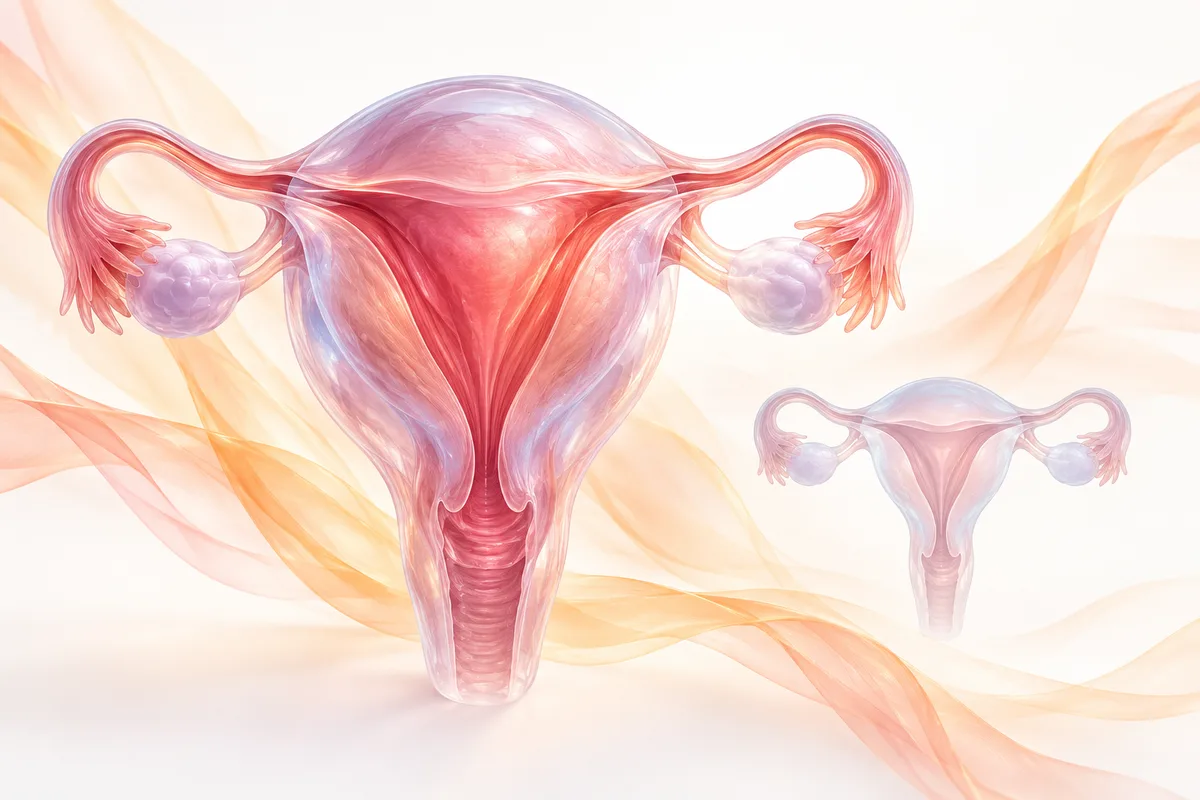
When a radiologist writes bulky uterus, bulky anteverted uterus or bulky uterus with thickened endometrium, it means the uterus measures larger than expected for your age and history. It tells you the size, not the reason. Many women are alarmed by the phrase, but it is a finding that needs a cause identified, not a disease in itself.
Common causes
These are the usual reasons, roughly in order of how often they are found.
| Cause | What it is | Typical clues |
|---|---|---|
| Fibroids | Non-cancerous growths in the uterine muscle [1, 3] | Heavy periods, pressure, lumpy outline on scan |
| Adenomyosis | Lining tissue growing into the muscle wall | Painful heavy periods, evenly enlarged tender uterus |
| Thickened endometrium | The inner lining is thicker than expected for the cycle or age | Irregular or heavy bleeding, needs evaluation |
| Polyps | Small growths of the lining | Bleeding between periods |
| Hormonal causes and pregnancy | Hormone changes or an early pregnancy | Depends on the situation, pregnancy is ruled out first |
Symptoms
Some women have none. When present, they include:
- Heavy or prolonged periods, sometimes with clots
- Painful periods or pelvic pain
- A feeling of fullness or heaviness in the lower abdomen
- Frequent urination or constipation from pressure
- Tiredness or breathlessness from anaemia
- Pain during sex
Tests that find the cause
A transvaginal or pelvic ultrasound usually starts the work-up. An MRI shows the uterine wall in detail and is the best way to tell fibroids from adenomyosis, and to see how many of each there are. If the lining is thickened or bleeding is irregular, especially around or after menopause, the endometrium needs separate evaluation, which can include a biopsy. That is a different pathway from treating fibroids and adenomyosis, so it is done first.
Treatment depends on the cause
Once the cause is known, the options are broadly these:
- Watchful waiting if there are no symptoms.
- Medicines or a hormone-releasing coil such as Mirena to control bleeding and pain.
- Uterine fibroid embolization for symptomatic fibroids, keeping the uterus [3, 4].
- Uterine artery embolization for adenomyosis, followed by review scans and a Mirena if symptoms return or the uterine volume rises. Our adenomyosis guide has the details and our own results.
- Myomectomy (fibroid removal) or adenomyoma removal, when other options are not suitable or pregnancy is the main goal.
When to see a specialist
Book a consultation if your periods are heavy enough to cause tiredness, if you have constant pelvic pain or pressure, if you have been told to have a hysterectomy for a bulky uterus, or if your scan shows a thickened lining along with bleeding. Bring all your ultrasound and MRI reports. Dr. Nagateja Bonala at Clinic Seven, Kukatpally reviews them and explains whether a non-surgical option suits you.
తెలుగులో సారాంశం
స్కాన్ రిపోర్ట్లో బల్కీ యూటరస్ అని ఉంటే గర్భాశయం సాధారణం కంటే పెద్దగా ఉందని అర్థం. ఇది వ్యాధి పేరు కాదు, కారణం కనుక్కోవాలి. ఎక్కువ సందర్భాల్లో కారణం ఫైబ్రాయిడ్లు లేదా అడినోమయోసిస్. ఎంఆర్ఐ స్కాన్ ద్వారా వీటిని స్పష్టంగా గుర్తించవచ్చు. కొందరిలో గర్భాశయం తీయకుండా, ఆపరేషన్ లేకుండా ఎంబోలైజేషన్ ద్వారా చికిత్స సాధ్యమవుతుంది. మీ రిపోర్ట్లతో క్లినిక్ సెవెన్లో డాక్టర్ నాగతేజ గారిని సంప్రదించండి.
Frequently asked questions
- What is a bulky uterus?
- It is a description on a scan meaning the uterus looks larger than expected. It is not a diagnosis, and the cause is usually fibroids, adenomyosis or a thickened lining [1, 2].
- Is a bulky uterus serious?
- Often it is not dangerous and may need only monitoring, but the cause must be identified. If you have heavy or irregular bleeding, especially with a thickened endometrium, it needs proper evaluation.
- Can a bulky uterus be treated without hysterectomy?
- In many women, yes. Depending on the cause, options include medicines, a Mirena, uterine fibroid embolization and uterine artery embolization for adenomyosis in selected patients. Hysterectomy is one option, not the only one.
- Does bulky uterus affect pregnancy?
- It can, depending on the cause. Fibroids and adenomyosis can affect fertility in some women. Discuss your plans before choosing treatment, because embolization is not usually advised when pregnancy is the main goal.
- What is bulky uterus with thickened endometrium?
- It means the uterus is enlarged and the lining is also thicker than expected. This needs evaluation of the lining, sometimes with a biopsy, in addition to finding the cause of the enlargement.
- Where can I get bulky uterus treatment in Hyderabad?
- Dr. Nagateja Bonala treats fibroids and adenomyosis without hysterectomy in selected patients at Clinic Seven, Kukatpally, Hyderabad. Bring your ultrasound and MRI reports.
References
- Society of Interventional Radiology. Uterine fibroids: patient information. Read the source
- American College of Obstetricians and Gynecologists. Uterine fibroids: FAQs. Read the source
- NHS. Fibroids: treatment. Read the source
- RadiologyInfo.org (RSNA and ACR). Uterine fibroid embolization (UFE). Read the source
Want to discuss your options?
Speak with the Clinic Seven team.