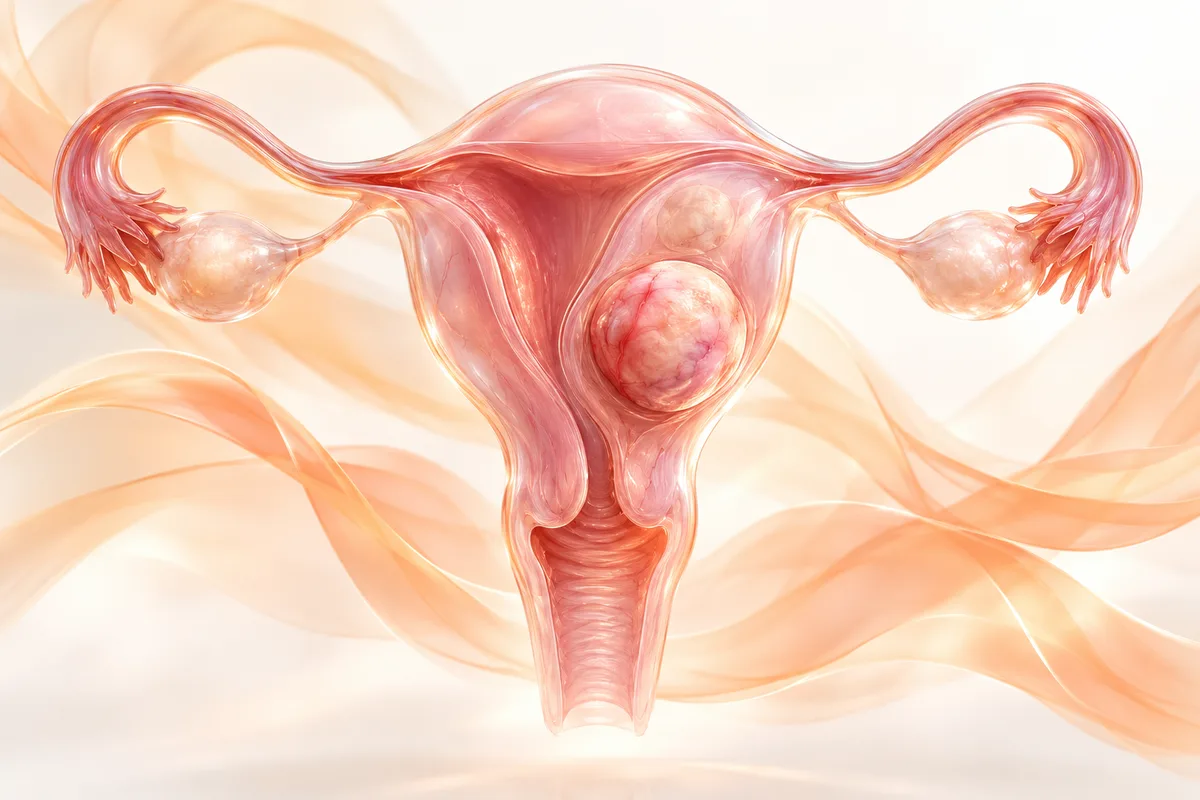
Patient guide
Advised myomectomy? Fibroid embolization (UFE) is a non-surgical option to know first
Told you need myomectomy or fibroid removal surgery? Learn how uterine fibroid embolization (UFE) treats fibroids with no cuts, no stitches and no general anaesthesia, keeps your uterus, and how to get a second opinion before you consent.
Advantages of UFE at a glance
- Keep your uterusNothing is removed
- UFE: no cutsNo incision, no stitches
- 1 vs 5 daysHospital stay, UFE vs surgery
- No general anaesthesiaWith UFE
- About a weekTo normal activity at Clinic Seven
- 85-90% reliefOf fibroid symptoms




Watch Dr. Nagateja explain this
Short videos on the same topic, in plain language.
Before you agree to a myomectomy
When fibroids cause heavy bleeding or pressure, the usual advice is an operation. Myomectomy removes the fibroids and repairs the uterus, through an open incision, keyhole surgery, or a hysteroscope. It is a well-known operation, so it is the one most women hear about.
What many women are not told is that fibroids can also be treated without an operation. In UFE, a thin catheter is passed through a small entry at the wrist or groin to the arteries feeding the fibroids, and tiny particles block their blood supply. The fibroids shrink over the next 3-6 months and symptoms ease [1, 2]. There is no incision, no stitches and no general anaesthesia.
You deserve to know both options before you decide.
Myomectomy and UFE: what each involves
Both keep your uterus. They get there in very different ways.
| Myomectomy | UFE | |
|---|---|---|
| What is done | Fibroids are cut out and the uterus repaired | Blood supply to the fibroids is blocked from inside the vessels [1, 2] |
| Incision | Abdominal, keyhole, or none if done through the cervix | None. A pinhole at the wrist or groin, with no stitches |
| Anaesthesia | General or spinal | Sedation and local numbing |
| Hospital stay | Surgery in the REST trial: average 5 days [3] | Embolization in REST: average 1 day [3], same-day discharge at Clinic Seven |
| Return to routine | Weeks | Most women within about a week at Clinic Seven |
| Several fibroids | Each fibroid is removed individually | Treated together in one sitting [1, 2] |
| Uterus | Kept | Kept |
Edwards et al., N Engl J Med 2007. Surgery group: 43 hysterectomies and 8 myomectomies.
Why women choose UFE
Women who look into UFE are usually looking for relief without an operation. This is what draws them to it.
- No cuts and no stitches, so no abdominal scar [1, 2].
- No general anaesthesia, and a day-care procedure.
- A faster return to work: significantly sooner than after surgery in the REST trial [3].
- Several fibroids treated in one sitting, because the treatment is aimed at their blood supply [1, 2].
- The uterus stays in place, with no surgical repair needed.
What the research shows
In the FEMME trial, which compared UFE with myomectomy in 254 premenopausal women who wished to avoid hysterectomy, complications were reported in 24% of women after UFE and 29% after myomectomy, and pregnancies and live births occurred after both treatments [4]. In the REST and EMMY trials, which compared UFE with surgery, quality of life improved significantly after embolization, and in EMMY it remained stable at 10 years, with 78% of women satisfied and about two thirds still having their uterus [3, 5].
Is UFE right for you?
This is decided at consultation, from your scan, not on a website. An MRI shows how many fibroids you have, where they are, and whether adenomyosis is also present. If you are planning a pregnancy, tell us at the start, because it shapes the plan and your gynaecologist and interventional radiologist can plan together. In some situations, such as a growth that might not be a simple fibroid, surgery is the right route, and we will say so.
- Bring your ultrasound or MRI and any blood tests.
- Ask how many fibroids you have and where they sit.
- Ask whether the operation could turn into a hysterectomy.
- Ask what your options are if you want to avoid an operation.
Get a second opinion before you consent
If you have been advised myomectomy, send your scan to Clinic Seven on WhatsApp or book a consultation. Dr. Nagateja Bonala, an interventional radiologist with more than 13 years of experience, reviews your scan and explains whether UFE fits you. Cashless treatment can be arranged with major Indian health insurers and TPAs. Eligibility is confirmed after a policy check.
Frequently asked questions
- Is there an alternative to myomectomy?
- Yes. Uterine fibroid embolization (UFE) treats fibroids without an operation. A thin catheter blocks the blood supply to the fibroids, so they shrink over 3-6 months, and your uterus stays in place [1, 2].
- Can I avoid fibroid removal surgery?
- Many women can. Depending on your scan, symptoms and plans, UFE can treat the fibroids with no cuts, no stitches and no general anaesthesia. Your suitability is confirmed at consultation.
- Can I get pregnant after UFE?
- Pregnancies and live births have been reported after UFE, including in the FEMME trial [4]. If a pregnancy is your goal, please say so at your consultation so your plan is made with that in mind.
- Do fibroids come back after UFE?
- UFE treats the fibroids that are present by cutting their blood supply, and follow-up scans check how they respond. New fibroids can develop after any treatment, which is why follow-up is planned.
- How long is recovery after UFE compared with fibroid surgery?
- In REST the average hospital stay was 1 day after UFE against 5 days after surgery, and women returned to work significantly sooner [3]. At Clinic Seven, most women are back to normal activity within about a week.
References
- Society of Interventional Radiology. Uterine fibroids: patient information. Read the source
- RadiologyInfo.org (RSNA and ACR). Uterine fibroid embolization (UFE). Read the source
- Edwards RD, et al. Uterine-artery embolization versus surgery for symptomatic uterine fibroids. N Engl J Med. 2007;356(4):360-70. Read the source
- Daniels J, et al. Uterine artery embolisation versus myomectomy for premenopausal women with uterine fibroids wishing to avoid hysterectomy: the FEMME RCT. Health Technol Assess. 2022;26(22):1-74. Read the source
- de Bruijn AM, et al. Uterine artery embolization vs hysterectomy in the treatment of symptomatic uterine fibroids: 10-year outcomes from the randomized EMMY trial. Am J Obstet Gynecol. 2016;215(6):745.e1-745.e12. Read the source
Want to discuss your options?
Speak with the Clinic Seven team.