Patient guide
Percutaneous nephrostomy (PCN): a tube to drain a blocked kidney
What a percutaneous nephrostomy (PCN) is, why a blocked or infected kidney needs it, how the tube is placed, living with a nephrostomy bag, risks, tube changes and how it compares with a ureteric stent.
PCN at a glance
- Fast reliefPressure on the kidney eases quickly
- Local anaestheticWith sedation if needed
- Ultrasound and X-rayThe tube is placed exactly
- No operationA thin tube through the skin
- About 30-60 minutesFor most PCNs
- Short stayOften a day or two




What a nephrostomy is
Urine normally flows from the kidney down the ureter to the bladder. If the ureter is blocked, urine backs up, the kidney swells (hydronephrosis), and kidney function and comfort suffer. If the stuck urine becomes infected (pyonephrosis), it can cause severe illness quickly.
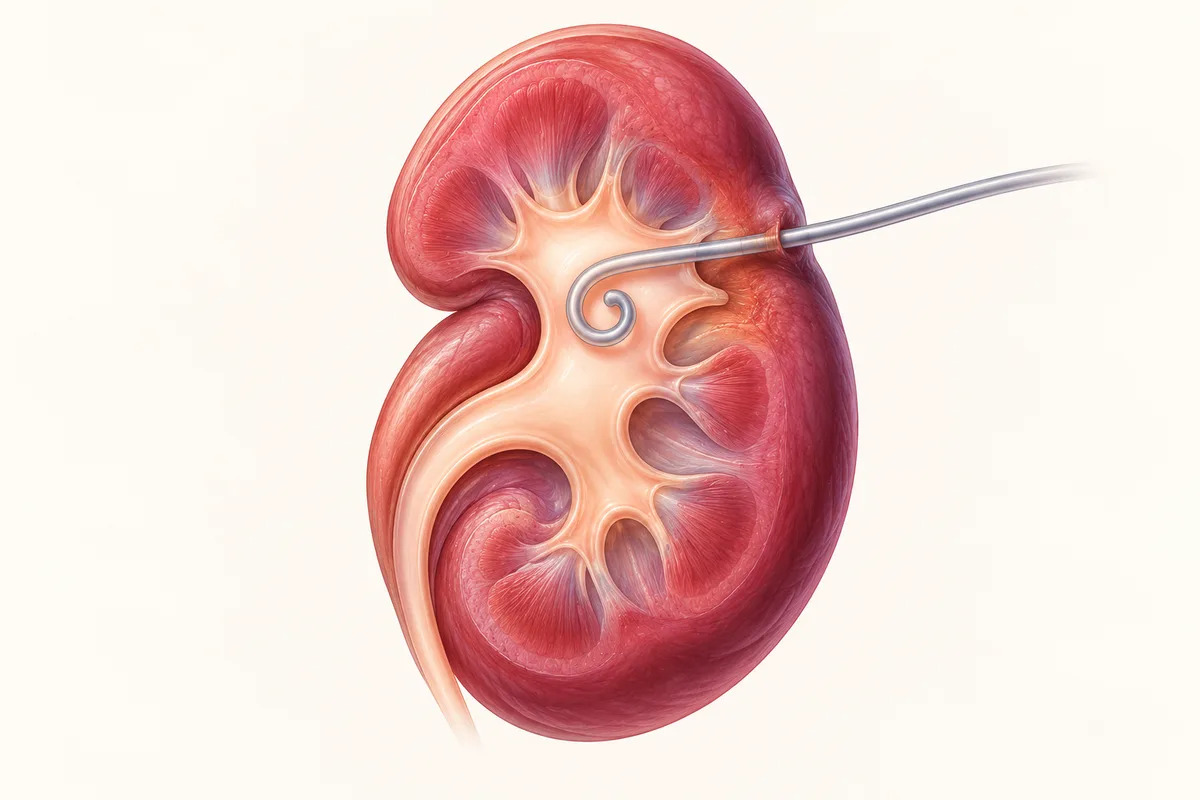
A percutaneous nephrostomy places a thin tube through the skin of the back into the kidney's collecting system, so urine drains into a bag outside the body, bypassing the block.
When a PCN is needed
These are the common reasons.
- An infected, blocked kidney (pyonephrosis), which needs urgent drainage.
- A blocked kidney from a stone, a tumour pressing on the ureter, or a stricture, with falling kidney function or severe pain.
- A leak from the ureter or bladder after surgery or injury, to divert the urine while it heals.
- Access to the kidney for treating stones or placing a stent through the kidney.
- Blocked kidneys from cancer in the pelvis, to protect the kidneys before or during treatment.
How the tube is placed
Placement usually takes 30 to 60 minutes.
- Blood tests are checked and antibiotics are given if infection is suspected, because the procedure can release bacteria into the blood.
- You lie on your front or side. Ultrasound shows the swollen kidney and the skin is numbed.
- A thin needle enters the kidney, and X-ray with a small dose of contrast confirms the position.
- A guidewire is passed, and a pigtail drainage tube is placed over it. The tip curls inside the kidney.
- The tube is secured to the skin and attached to a drainage bag.
Living with a nephrostomy tube
You will get written instructions, and the usual points are these.
- Keep the dressing clean and dry, and change it as taught.
- Drink plenty of fluid unless told otherwise, and keep the bag below the level of the kidney.
- Empty the bag when it is about half full.
- Some blood in the urine is common for the first days.
- Call for fever with chills, a tube that falls out or leaks, no urine draining, severe pain or heavy bleeding.
Risks
Bleeding and blood in the urine are the commonest effects. Infection, the tube moving or blocking, and, rarely, injury to nearby organs or the lung can occur. Kidney procedures are in the higher bleeding risk group, so blood tests and blood thinners are managed beforehand [2]. The team explains these before you consent.
Tube changes, and PCN or a ureteric stent
A nephrostomy tube is usually changed every few months while it is still needed, and removed once the blockage has been treated. A ureteric stent, placed from the bladder by the urologist, is an internal alternative with no bag, and is often tried first when a stone or stricture can be crossed. A PCN is chosen when infection needs urgent drainage, the stent cannot be passed, or the blockage is not suitable for a stent. Your doctors decide together.
Cost and insurance
Health insurance can cover these procedures, subject to your policy terms. The exact cost is calculated after consultation, a complete evaluation of the problem, and a decision on the procedure that suits you. Cashless treatment can be arranged with major Indian health insurers and TPAs, and credit treatment is available for CGHS and Singareni beneficiaries. Eligibility is confirmed after a policy check.
Frequently asked questions
- Is a nephrostomy painful?
- The skin and kidney area are numbed, so placement causes pressure and a pinch. Soreness around the tube for a few days is usual and treated with pain relief.
- How long does a nephrostomy tube stay in?
- For as long as the blockage remains. Some are temporary for days or weeks after a stone or infection is treated, others stay for months and are changed regularly.
- Can I live normally with a nephrostomy bag?
- Most people can, with care of the dressing and bag. Ask about showering, clothing and activity at your review.
- Why is an infected blocked kidney an emergency?
- Because the infected urine under pressure can spread into the blood and cause septic shock. Draining it quickly is the key step.
- PCN or ureteric stent, which is better?
- Neither is better in every case. A stent has no bag and is often tried first, while a PCN is preferred for an infected, blocked kidney or when a stent cannot be placed.
References
- Pabon-Ramos WM, Dariushnia SR, Walker TG, et al. Quality improvement guidelines for percutaneous nephrostomy. J Vasc Interv Radiol. 2016;27(3):410-414. Read the source
- Patel IJ, Rahim S, Davidson JC, et al. Society of Interventional Radiology Consensus Guidelines for the Periprocedural Management of Thrombotic and Bleeding Risk in Patients Undergoing Percutaneous Image-Guided Interventions, Part II: Recommendations. J Vasc Interv Radiol. 2019;30(8):1168-1184. Read the source
Want to discuss your options?
Speak with the Clinic Seven team.