Patient guide
Budd-Chiari syndrome: stepwise management from blood thinners to angioplasty, TIPS and DIPS
Budd-Chiari syndrome explained: blocked liver veins, symptoms, and the stepwise approach of anticoagulation, angioplasty and stenting, TIPS or DIPS, and transplant when needed.
Budd-Chiari at a glance
- StepwiseNext step only if needed
- Angioplasty and stentsOpen narrowed veins
- TIPS or DIPSShunt without open surgery
- 82% patencyDIPS at one year (2026 series)
- Follow-up scansCheck for narrowing


What Budd-Chiari syndrome is
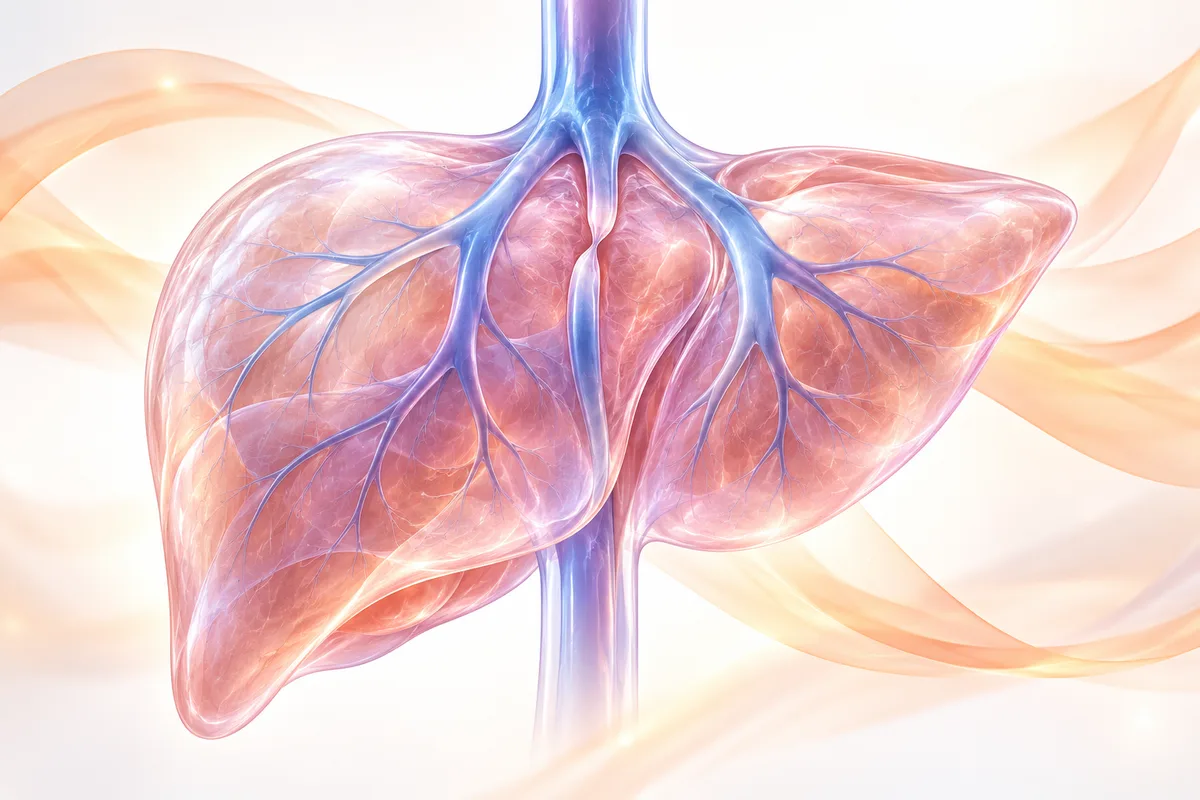
When the hepatic veins or the vena cava at the liver are blocked, blood cannot leave the liver. It swells and becomes congested, causing abdominal pain, ascites, an enlarged liver and, if untreated, liver damage. Causes include clotting disorders such as myeloproliferative neoplasms (JAK2). Membranous webs and narrowings of the vena cava are another cause in some patients [1].
The stepwise approach
European guidelines recommend a stepwise approach, moving to the next step only if the previous one does not control the disease [1].
| Step | What is done | Notes |
|---|---|---|
| 1. Medical | Anticoagulation, treating the underlying cause, managing ascites | Started at diagnosis [1] |
| 2. Angioplasty or stenting | A balloon opens a short narrowing or web in a hepatic vein or the vena cava, and a stent can keep it open | Suited to short-length stenoses; done through a catheter [1] |
| 3. TIPS or DIPS | A stent shunt is made from the portal vein into a hepatic vein (TIPS) or the vena cava (DIPS) | When the veins cannot be opened, or the response is not enough [1, 2] |
| 4. Liver transplant | For those who fail the above | A rescue option [1] |
Why angioplasty and shunts are important
These catheter-based steps can restore drainage of the liver without a major operation and can be repeated if the vein narrows again. In the 2026 series of 161 endovascular interventions for Budd-Chiari, including 58 DIPS procedures, DIPS patency was 82% at one year, and overall survival in the series was 88% at ten years [2]. The same series showed that repeat procedures are common, which is why follow-up scans are part of care.
Mukund et al., Liver Int 2026, 161 interventions including 58 DIPS [2].
Living with Budd-Chiari
Lifelong anticoagulation is often needed, and treatment of the underlying cause continues. Regular ultrasound or Doppler checks look for restenosis. Liver cancer surveillance is advised in long-standing disease. Your team arranges a follow-up plan with the hepatologist.
Getting an opinion
Bring your Doppler, CT or MR venogram, liver function tests and the report of any clotting work-up. Dr. Nagateja Bonala reviews the anatomy and explains whether angioplasty, TIPS or DIPS can help.
Frequently asked questions
- How is Budd-Chiari syndrome treated?
- Stepwise: anticoagulation and treating the cause, then angioplasty or stenting of narrowed veins, then a TIPS or DIPS shunt if needed, with liver transplant for those who fail [1].
- Can Budd-Chiari be treated without surgery?
- Often yes. Angioplasty, stenting, TIPS and DIPS are catheter-based, and many patients are managed with these steps [1, 2].
- What is DIPS?
- A direct intrahepatic portosystemic shunt, made from the inferior vena cava into the portal vein, used when the hepatic veins cannot be used for a standard TIPS [2].
- Will I need blood thinners for life?
- Often yes, especially with an underlying clotting disorder. Your hepatologist decides this [1].
References
- EASL Clinical Practice Guidelines: Vascular diseases of the liver. J Hepatol. 2016;64(1):179-202. Read the source
- Mukund A, et al. Long-Term Efficacy and Outcomes of Endovascular Interventions in Budd-Chiari Syndrome. Liver Int. 2026. Read the source
- Northup PG, et al. Vascular Liver Disorders, Portal Vein Thrombosis, and Procedural Bleeding in Patients With Liver Disease: 2020 Practice Guidance by the American Association for the Study of Liver Diseases. Hepatology. 2021. Read the source
Want to discuss your options?
Speak with the Clinic Seven team.