Patient guide
Transjugular liver biopsy (TJLB): a safer route when a needle biopsy is risky
What a transjugular liver biopsy is, when it is chosen over a needle biopsy through the skin (ascites, low platelets, clotting problems), how it is done, how safe it is, and how to ask for one in Hyderabad.
Transjugular biopsy at a glance
- 0.56% majorComplication rate (7,649 procedures)
- 96.1% diagnosticDiagnostic yield
- Through the neck veinNeedle stays inside the vessels
- Local anaesthesiaWith light sedation
- Day careHome the same or next day

Why a liver biopsy is needed
When blood tests and scans cannot explain why the liver is unwell, a small piece of liver tissue shows what is going on under the microscope. It helps to diagnose conditions such as autoimmune hepatitis, fatty liver disease with inflammation, drug injury, and unexplained abnormal liver tests, and to grade scarring.
Why the transjugular route
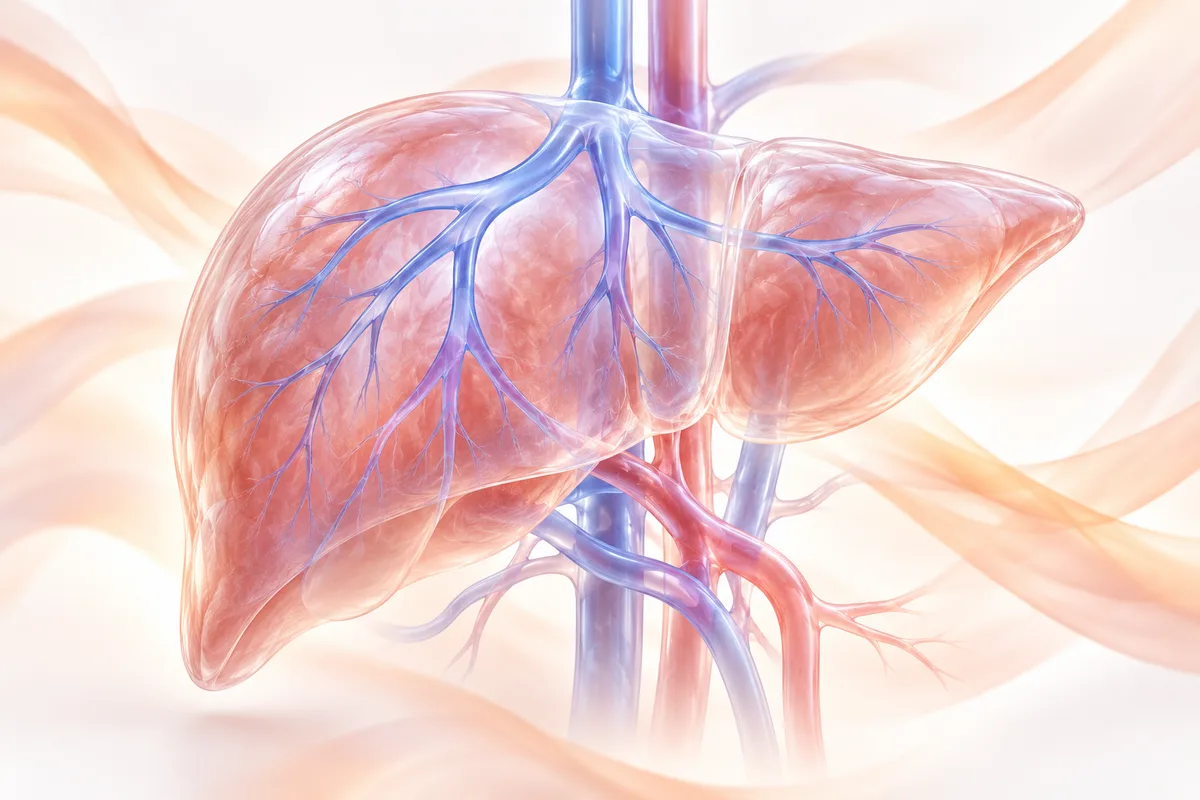
A standard biopsy passes a needle through the skin and the abdominal wall. If the blood does not clot well, the platelets are low, or there is fluid in the abdomen, bleeding into the abdomen is a bigger concern. In a TJLB, the doctor passes a catheter from the neck vein into a hepatic vein inside the liver and takes the sample through the vein wall. Any bleeding stays in the vascular system.
| Through the skin | Transjugular | |
|---|---|---|
| Needle passes through | The abdominal wall and liver capsule | A hepatic vein inside the liver |
| Suited to ascites | Often avoided | Yes |
| Suited to low platelets or clotting problems | Higher bleeding risk | Preferred |
| Extra benefit | None | Portal pressure (HVPG) can be measured at the same time |
How safe it is
In the Kalambokis systematic review of 64 series with 7,649 transjugular biopsies, the success rate was 96.8%, the diagnostic yield 96.1%, minor complications 6.5%, major complications 0.56%, and adult mortality 0.09% [1]. A separate series of 341 consecutive procedures reported a major complication rate of 0.59% [2].
Kalambokis et al., J Hepatol 2007, 64 series [1].
What to expect
It is done in the angiography suite under local anaesthesia with light sedation, and takes under an hour. Neck soreness and mild discomfort over the liver are common. Most people go home the same day or the next day, after a short observation period.
How to ask for it
Bring your blood tests, platelet count, clotting profile and scans. Dr. Nagateja Bonala reviews them and explains whether a transjugular route is the safer choice for you.
Frequently asked questions
- What is a transjugular liver biopsy?
- A liver biopsy done through the jugular vein in the neck. A catheter reaches the hepatic vein inside the liver and a small sample is taken through the vein wall, keeping the needle inside the vascular system [1].
- When is TJLB preferred over a normal biopsy?
- When there is ascites, low platelets, a clotting problem, or a small shrunken liver, where bleeding with a skin needle is a bigger concern.
- How safe is a transjugular liver biopsy?
- In a systematic review of 7,649 procedures, major complications were 0.56% and minor complications 6.5% [1].
- Can portal pressure be measured at the same time?
- Yes. The hepatic venous pressure gradient (HVPG) can be measured through the same route.
- Is it painful?
- It is done under local anaesthesia with sedation. Some neck or liver-area soreness afterwards is common.
References
- Kalambokis G, et al. Transjugular liver biopsy: indications, adequacy, quality of specimens, and complications. A systematic review. J Hepatol. 2007. Read the source
- Dohan A, et al. Major complications due to transjugular liver biopsy: Incidence, management and outcome. Diagn Interv Imaging. 2015. Read the source
Want to discuss your options?
Speak with the Clinic Seven team.