Patient guide
TIPS (TIPSS) and DIPS for portal hypertension, ascites and variceal bleeding
What TIPS (TIPSS) and DIPS shunts are, when they are used for variceal bleeding, refractory ascites and Budd-Chiari, what the early-TIPS trial showed, risks such as encephalopathy, and how to get an opinion in Hyderabad.
TIPS at a glance
- No abdominal operationThrough a vein in the neck
- 86% vs 61%One-year survival, early TIPS (trial)
- Lowers portal pressureEases bleeding and ascites
- Covered stentKeeps the shunt open
- Follow-up scansStent is monitored


What portal hypertension is
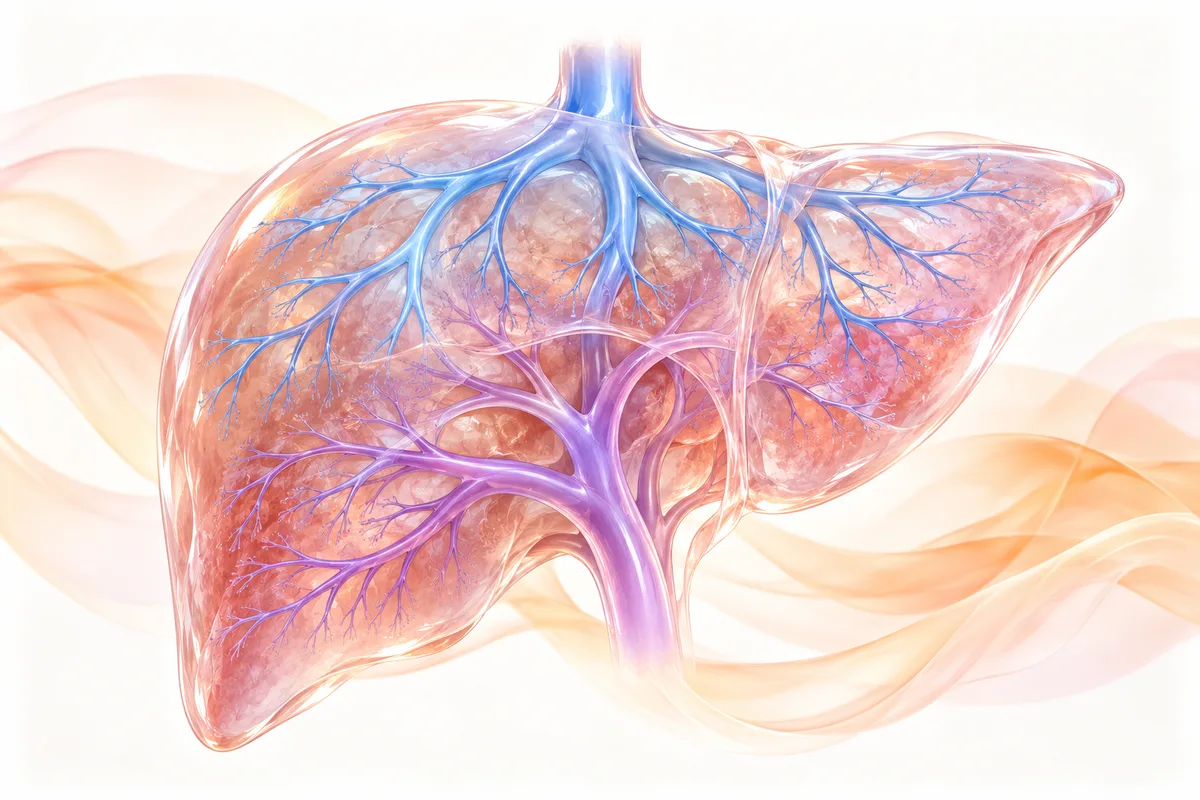
In cirrhosis, scarring makes it harder for blood to flow through the liver, so pressure builds up in the portal vein. This causes enlarged veins (varices) in the gullet and stomach that can bleed, and fluid in the abdomen (ascites) that keeps coming back [2].
What TIPS does
An interventional radiologist passes a catheter through the jugular vein in the neck into the liver, and creates a channel between the portal vein and a hepatic vein. A covered stent keeps it open. Blood now has an easy route past the scarred liver, so portal pressure falls. Varices stop bleeding and ascites eases [1]. It is done under sedation or anaesthesia, with a stay of a few days.
When TIPS is used
These are the usual situations. Your hepatologist and interventional radiologist decide together.
| Situation | How TIPS fits |
|---|---|
| Acute variceal bleeding at high risk of returning | Early TIPS within the first days in selected high-risk patients, as in the Baveno VII consensus [2, 3] |
| Variceal bleeding not controlled by endoscopy and drugs | Rescue TIPS |
| Refractory ascites needing repeated drainage | TIPS reduces the need for repeated paracentesis [2] |
| Portal vein thrombosis or Budd-Chiari with portal hypertension | TIPS or DIPS can restore a route for blood [4, 5] |
What the early-TIPS trial found
A randomised trial of 63 patients with cirrhosis and acute variceal bleeding, at high risk of treatment failure, compared early TIPS with standard drugs plus endoscopic banding. Rebleeding or failure to control bleeding occurred in 1 patient after early TIPS against 14 after standard treatment, and one-year survival was 86% against 61% [3].
Garcia-Pagan et al., N Engl J Med 2010, 63 patients [3].
DIPS: a shunt from the vena cava
DIPS (direct intrahepatic portosystemic shunt) is made from the inferior vena cava into the portal vein through the liver, guided by ultrasound. It is used when the usual TIPS route is not possible, for example in Budd-Chiari syndrome when the hepatic veins are blocked. In a 2026 series of 161 endovascular interventions for Budd-Chiari, including 58 DIPS procedures, DIPS patency was 82% at one year and overall survival in the series was 88% at ten years [4].
Risks to know about
TIPS is an effective treatment with real trade-offs. Because blood bypasses the liver, some people develop hepatic encephalopathy (confusion or sleepiness) and need medicine for it. The stent can narrow over time and needs surveillance, and a TIPS is avoided in some patients with very advanced liver or heart disease. Your team goes through these with you before deciding [1, 2].
Frequently asked questions
- What is a TIPS procedure?
- TIPS (or TIPSS) is a stent placed inside the liver through the neck vein, linking the portal vein to a hepatic vein to lower portal pressure without an abdominal operation [1].
- When is TIPS done for variceal bleeding?
- In selected high-risk patients early after bleeding, and when bleeding is not controlled by endoscopy and drugs. In a trial of 63 patients, early TIPS cut rebleeding and raised one-year survival to 86% from 61% [3].
- Can TIPS treat ascites?
- Yes, TIPS is used for refractory ascites that needs repeated drainage [2].
- What is DIPS?
- DIPS is a shunt created from the inferior vena cava directly into the portal vein, used in selected cases such as Budd-Chiari syndrome [4].
References
- RadiologyInfo.org (RSNA and ACR). Transjugular intrahepatic portosystemic shunt (TIPS). Read the source
- de Franchis R, Bosch J, Garcia-Tsao G, Reiberger T, Ripoll C; Baveno VII Faculty. Baveno VII - Renewing consensus in portal hypertension. J Hepatol. 2022;76(4):959-974. Read the source
- Garcia-Pagan JC, Caca K, Bureau C, et al. Early use of TIPS in patients with cirrhosis and variceal bleeding. N Engl J Med. 2010;362(25):2370-2379. Read the source
- Mukund A, et al. Long-Term Efficacy and Outcomes of Endovascular Interventions in Budd-Chiari Syndrome. Liver Int. 2026. Read the source
- EASL Clinical Practice Guidelines: Vascular diseases of the liver. J Hepatol. 2016;64(1):179-202. Read the source
Want to discuss your options?
Speak with the Clinic Seven team.