Patient guide
Portal vein thrombosis: when blood thinners are enough and when a catheter procedure helps
Portal vein thrombosis explained: causes, symptoms, anticoagulation, and when TIPS or catheter-directed treatment is considered, including what a 2026 meta-analysis found on blood thinners.
Portal vein clot at a glance
- Blood thinners firstUsual first treatment
- RR 3.49Recanalization, DOAC vs VKA (2026)
- TIPS optionWhen anticoagulation is not enough
- Catheter treatmentNo open surgery
- Cause treatedAlongside the clot



What PVT is and why it matters
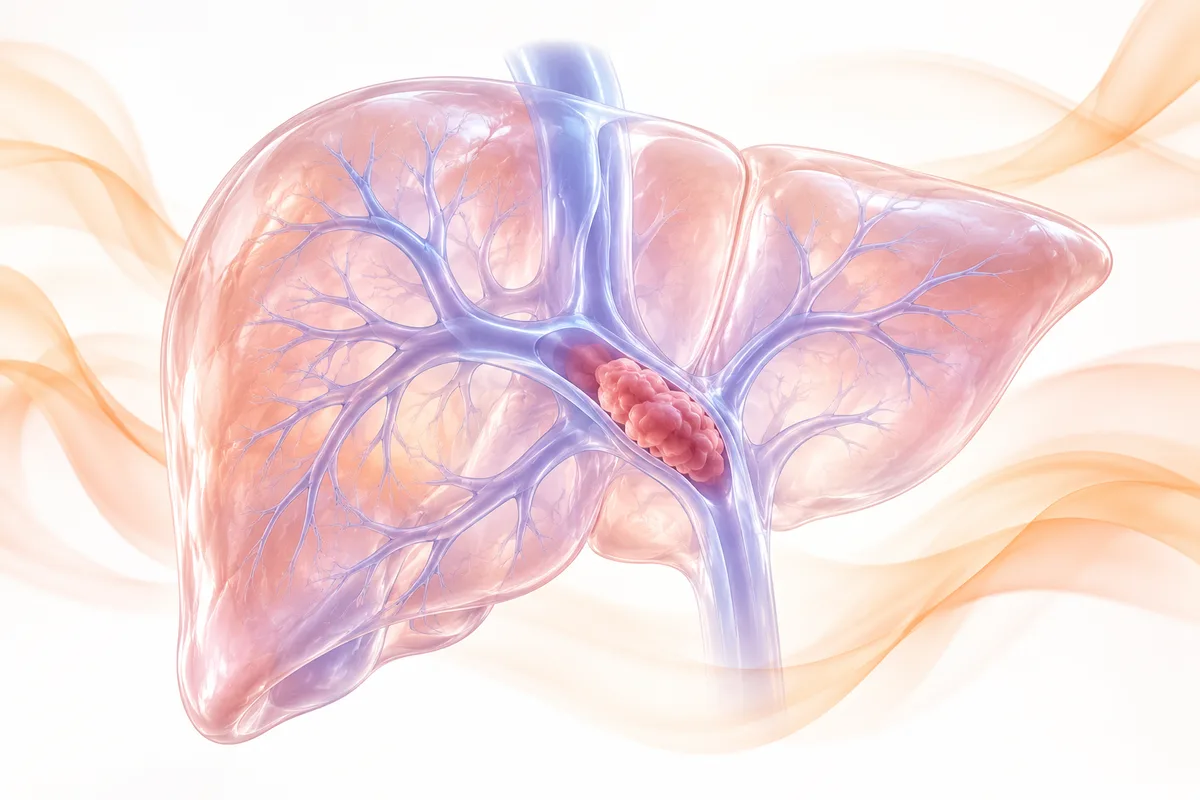
The portal vein brings blood from the intestine and spleen to the liver. A clot in it raises pressure in the portal system and can cause abdominal pain, ascites, bleeding from varices and, in time, worsen liver function. Some clots cause no symptoms and are found on a scan. Your team first asks whether the clot is recent (acute), long standing (chronic), or a tumour thrombus from liver cancer, because treatment differs [1, 2].
Step 1: anticoagulation
Blood thinners are the first treatment for a recent clot and for many chronic ones. They stop the clot spreading and let the body open the vein again. Guidelines advise treatment for at least several months [1, 2]. In a 2026 meta-analysis in patients with cirrhosis, direct oral anticoagulants gave higher complete recanalization than vitamin K antagonists (risk ratio 3.49) and lower clot progression, with no significant difference in major bleeding [3]. Varices are checked and treated first, to lower the bleeding risk.
Step 2: when an interventional procedure is considered
These options are considered by a team when anticoagulation alone is not enough, is not safe, or the clot is extensive.
| Option | What it does | Considered when |
|---|---|---|
| TIPS with recanalization | A stent shunt is placed through the clot to restore flow | Symptomatic portal hypertension with PVT, or failure of anticoagulation [2] |
| Catheter-directed thrombolysis or thrombectomy | Clot-dissolving drug or a device clears the clot from inside the vein | Extensive recent clot, with bowel at risk |
| Treat the cause | Treat infection, a clotting disorder or tumour | Always, alongside the above |
PVT in liver cancer
In hepatocellular carcinoma, a clot can be tumour growing into the portal vein. It is treated differently from a blood clot, and options such as TARE or TACE in selected patients may be discussed by the tumour board [4]. A scan with contrast helps tell the two apart.
Asking for an opinion
Bring your scans (CT or MR venography), endoscopy report and liver function tests. Dr. Nagateja Bonala reviews them and explains whether anticoagulation, TIPS or a catheter procedure is suitable.
Frequently asked questions
- How is portal vein thrombosis treated?
- Usually with anticoagulation first [1, 2]. If that is not enough or not possible, TIPS or catheter-directed clot removal can be considered by a specialist team.
- Can portal vein thrombosis go away?
- Yes, with treatment many clots partly or fully recanalize. A 2026 meta-analysis found higher complete recanalization with direct oral anticoagulants than with vitamin K antagonists [3].
- Is anticoagulation safe in cirrhosis?
- It can be used in selected patients once varices are checked and treated. In the 2026 meta-analysis, major bleeding was not significantly different between the anticoagulants compared [3].
- Is a clot in the portal vein the same as a liver tumour thrombus?
- No. A tumour thrombus is cancer growing into the vein and is managed by the tumour board [4].
References
- EASL Clinical Practice Guidelines: Vascular diseases of the liver. J Hepatol. 2016;64(1):179-202. Read the source
- Northup PG, et al. Vascular Liver Disorders, Portal Vein Thrombosis, and Procedural Bleeding in Patients With Liver Disease: 2020 Practice Guidance by the American Association for the Study of Liver Diseases. Hepatology. 2021. Read the source
- Direct oral anticoagulants in portal vein thrombosis in patients with cirrhosis: a systematic review and meta-analysis. Blood Adv. 2026. Read the source
- Reig M, Forner A, Rimola J, et al. BCLC strategy for prognosis prediction and treatment recommendation: The 2022 update. J Hepatol. 2022;76(3):681-693. Read the source
Want to discuss your options?
Speak with the Clinic Seven team.