Patient guide
Splenic artery embolization for hypersplenism and low platelets in liver disease
How partial splenic embolization raises platelet counts in cirrhosis and hypersplenism without removing the spleen, what a 2026 study found, risks, and how to ask for an opinion in Hyderabad.
Splenic embolization at a glance
- Spleen keptOnly part is embolized
- Platelets upAbout 143% short term (47 patients)
- Catheter procedureNo incision
- Under 50%Gives comparable long-term benefit
- Short stayA few days



When the spleen causes a problem
In cirrhosis and portal hypertension, the spleen swells and sequesters platelets and white cells. A low platelet count raises the risk of bleeding and may stop patients from having procedures, interferon-based treatment or chemotherapy. Traditionally the choices were to watch, or remove the spleen with an operation.
What partial splenic embolization does
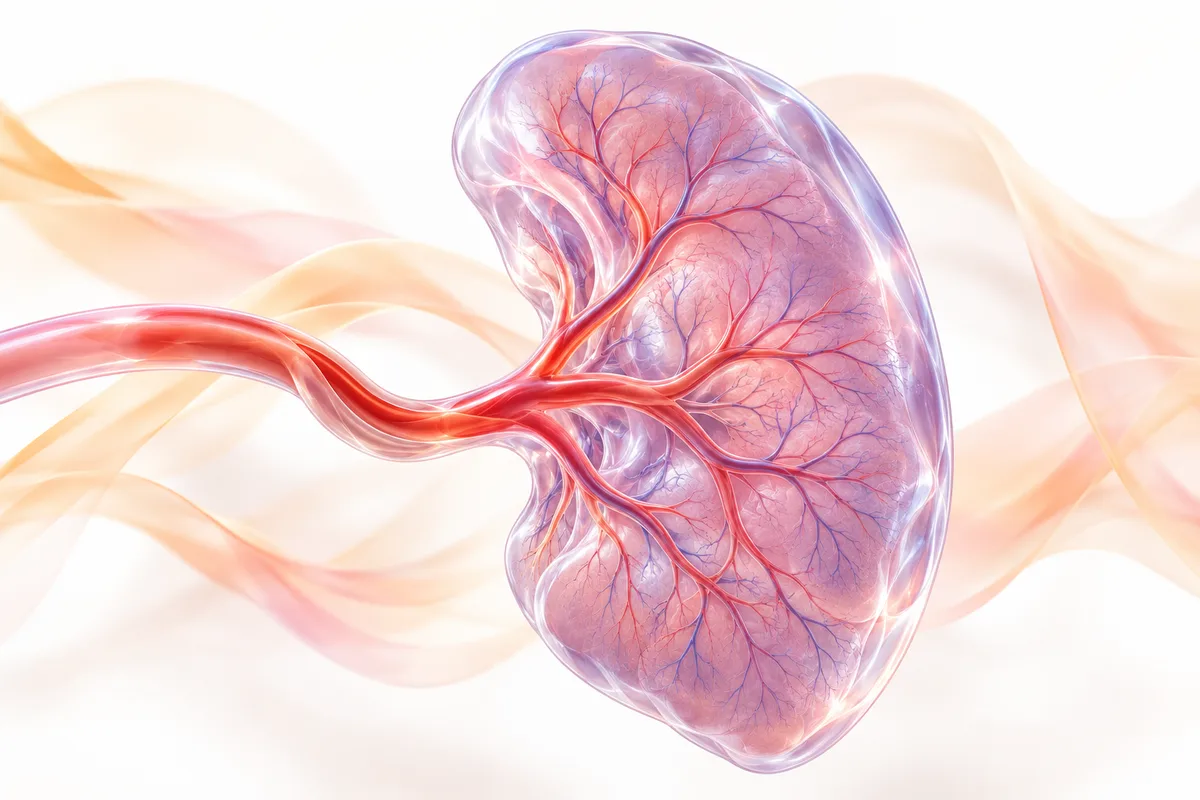
An interventional radiologist passes a catheter from the groin or wrist to the splenic artery and releases small particles in the branches that supply part of the spleen. That part shrinks, and the spleen traps fewer blood cells. The remaining spleen keeps working, so immune protection is largely retained. Doing the whole spleen is avoided because of the higher complication risk [1].
What the evidence shows
In a 2026 study of 47 patients with cirrhosis, platelet counts rose by 143% in the short term and 83.7% in the long term. The study compared embolizing less than 50% of the spleen with more than 50%, and found comparable long-term benefit with fewer complications when less than half was treated [1]. Most of the data comes from single-centre studies.
Srivastava et al., Indian J Gastroenterol 2026, 47 patients [1].
What to expect and the risks
Most people have a few days of upper left abdominal pain, fever and nausea, sometimes called post-embolization syndrome, which is treated with medicines and usually settles. Hospital stay is a few days. Less common risks include fluid around the left lung, splenic abscess and portal vein clot, which is why the amount treated is limited and a close follow-up is arranged.
Asking for an opinion
Bring your platelet counts, a CT scan with splenic size, and liver function tests. Dr. Nagateja Bonala reviews whether splenic artery embolization suits you, or whether another approach is better.
Frequently asked questions
- What is splenic artery embolization?
- A catheter procedure that blocks part of the blood supply to the spleen, so the spleen shrinks and traps fewer platelets, without removing it.
- Does it raise platelet count?
- Yes. In a 2026 study of 47 patients, platelets rose by about 143% in the short term and 84% in the long term [1].
- Do I lose my spleen?
- No. Only part of the spleen is embolized and the rest keeps working.
- Is it painful?
- Left upper abdominal pain, fever and nausea for a few days are common and are treated with medicines [1].
References
- Srivastava A, et al. Partial splenic embolization in patients with cirrhosis: comparison of less than 50% versus more than 50% infarction strategy. Indian J Gastroenterol. 2026. Read the source
- de Franchis R, Bosch J, Garcia-Tsao G, Reiberger T, Ripoll C; Baveno VII Faculty. Baveno VII - Renewing consensus in portal hypertension. J Hepatol. 2022;76(4):959-974. Read the source
Want to discuss your options?
Speak with the Clinic Seven team.