Patient guide
Ascitic fluid tapping (paracentesis): procedure, safety and aftercare
What ascitic fluid tapping (paracentesis) is, the difference between diagnostic and therapeutic taps, how it is done under ultrasound, albumin for large taps, risks and what to do when fluid keeps returning.
Ascitic tapping at a glance
- Local anaestheticNumbing only
- A thin needle or catheterNo cut, no stitches
- Often day-careMany go home the same day
- Ultrasound guidedA safe pocket of fluid is chosen
- About 30-60 minutesFor most taps
- Quick reliefEasier breathing and eating


What ascitic fluid tapping is
Ascites is a build-up of fluid inside the abdomen, most often from cirrhosis of the liver, but also from infection such as tuberculosis, cancer, heart failure or kidney disease. It makes the belly swollen and tight, and can cause breathlessness, a feeling of fullness and poor appetite.
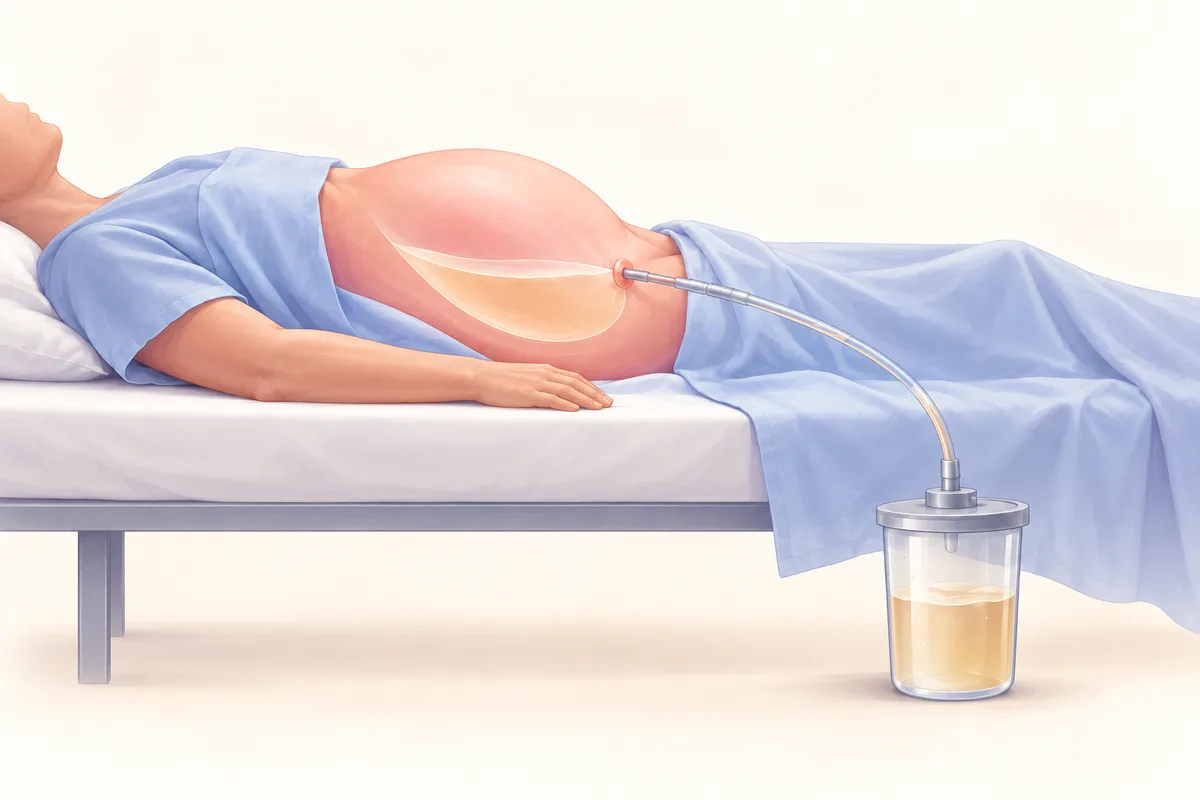
Paracentesis (ascitic tapping) uses a needle or a thin catheter passed through the abdominal wall to remove some of that fluid. It is usually done under ultrasound, which shows a safe pocket of fluid away from the bowel and blood vessels.
Diagnostic and therapeutic taps
The same technique serves two purposes.
| Diagnostic tap | Therapeutic tap | |
|---|---|---|
| Purpose | Find out why fluid is present, and look for infection | Relieve a tight, uncomfortable belly |
| Volume | A small sample, about 20 to 50 mL | Litres, depending on symptoms |
| Albumin | Not needed | Given into a vein for large volumes [1, 2] |
| Stay | Day-care | Day-care or a short stay |
What the fluid tests show
The laboratory counts the white cells, measures the protein and albumin (and compares it with blood albumin to give the serum-ascites albumin gradient, which separates liver-related fluid from other causes), and cultures the fluid for infection. A neutrophil count of 250 per cubic millimetre or more suggests spontaneous bacterial peritonitis, which is treated with antibiotics [1]. Cytology looks for cancer cells, and tests for tuberculosis may be added when it is suspected.
How it is done
Plan around 30 to 60 minutes for a therapeutic tap.
- You lie on your back or slightly on your side. Ultrasound finds the best pocket of fluid.
- The skin is cleaned and numbed with local anaesthetic.
- A needle or a thin catheter is passed into the fluid, and the fluid drains into a bag or bottle.
- For a therapeutic tap, the amount drained depends on how you feel, your blood pressure and the guidance of your doctor.
- The catheter is removed, and a small dressing is placed. If albumin is advised, it is given into a vein during or after the tap.
Safety and risks
Paracentesis is a low bleeding risk procedure [3], and routine correction of mildly abnormal clotting tests with plasma or platelets before it is not recommended [1]. Possible effects include leakage of fluid from the puncture site, a small bruise, low blood pressure after a large tap, and rarely infection, bleeding or injury to the bowel. Large taps without albumin can upset the circulation and kidneys, which is why albumin is given [1, 2].
Tell the team about blood thinners and do not stop them yourself.
When fluid keeps coming back
Repeated taps relieve symptoms, but they do not treat the cause. Treatment of cirrhotic ascites includes salt restriction, diuretics and treating the underlying liver disease, and for ascites that keeps returning, a TIPS shunt can be considered in selected people. For ascites caused by cancer, a thin tunnelled catheter is sometimes used so fluid can be drained at home. Your doctor reviews which option fits you.
Cost and insurance
Health insurance can cover these procedures, subject to your policy terms. The exact cost is calculated after consultation, a complete evaluation of the problem, and a decision on the procedure that suits you. Cashless treatment can be arranged with major Indian health insurers and TPAs, and credit treatment is available for CGHS and Singareni beneficiaries. Eligibility is confirmed after a policy check.
Frequently asked questions
- Is ascitic tapping painful?
- The skin is numbed first, so most people feel only a pinch and some pressure. A sore spot at the puncture for a day or two is usual.
- How much fluid is removed?
- A diagnostic tap takes a small sample. A therapeutic tap may take several litres, and the amount is guided by your symptoms, blood pressure and your doctor. Albumin is given for large volumes [1, 2].
- Will the fluid come back?
- In cirrhosis it often does, because the cause is still there. Medicines, salt restriction and other treatments slow it, and TIPS may be considered if it returns rapidly.
- Do I need to stop eating before the tap?
- Usually not, unless you are told otherwise. Tell the team about blood thinners and diabetes medicines.
- Can I go home the same day?
- Often yes after a short observation. Your doctor decides, depending on how much was drained and how you feel.
References
- Biggins SW, Angeli P, Garcia-Tsao G, et al. Diagnosis, evaluation, and management of ascites, spontaneous bacterial peritonitis and hepatorenal syndrome: 2021 practice guidance by the American Association for the Study of Liver Diseases. Hepatology. 2021;74(2):1014-1048. Read the source
- Bernardi M, Caraceni P, Navickis RJ, Wilkes MM. Albumin infusion in patients undergoing large-volume paracentesis: a meta-analysis of randomized trials. Hepatology. 2012;55(4):1172-1181. Read the source
- Patel IJ, Rahim S, Davidson JC, et al. Society of Interventional Radiology Consensus Guidelines for the Periprocedural Management of Thrombotic and Bleeding Risk in Patients Undergoing Percutaneous Image-Guided Interventions, Part II: Recommendations. J Vasc Interv Radiol. 2019;30(8):1168-1184. Read the source
Want to discuss your options?
Speak with the Clinic Seven team.